Hog Hunting In Georgia
Photo: Spot and Stalk Hog Hunting @HogSWAT
Photo: Wild Boar Hunting @HogSWAT
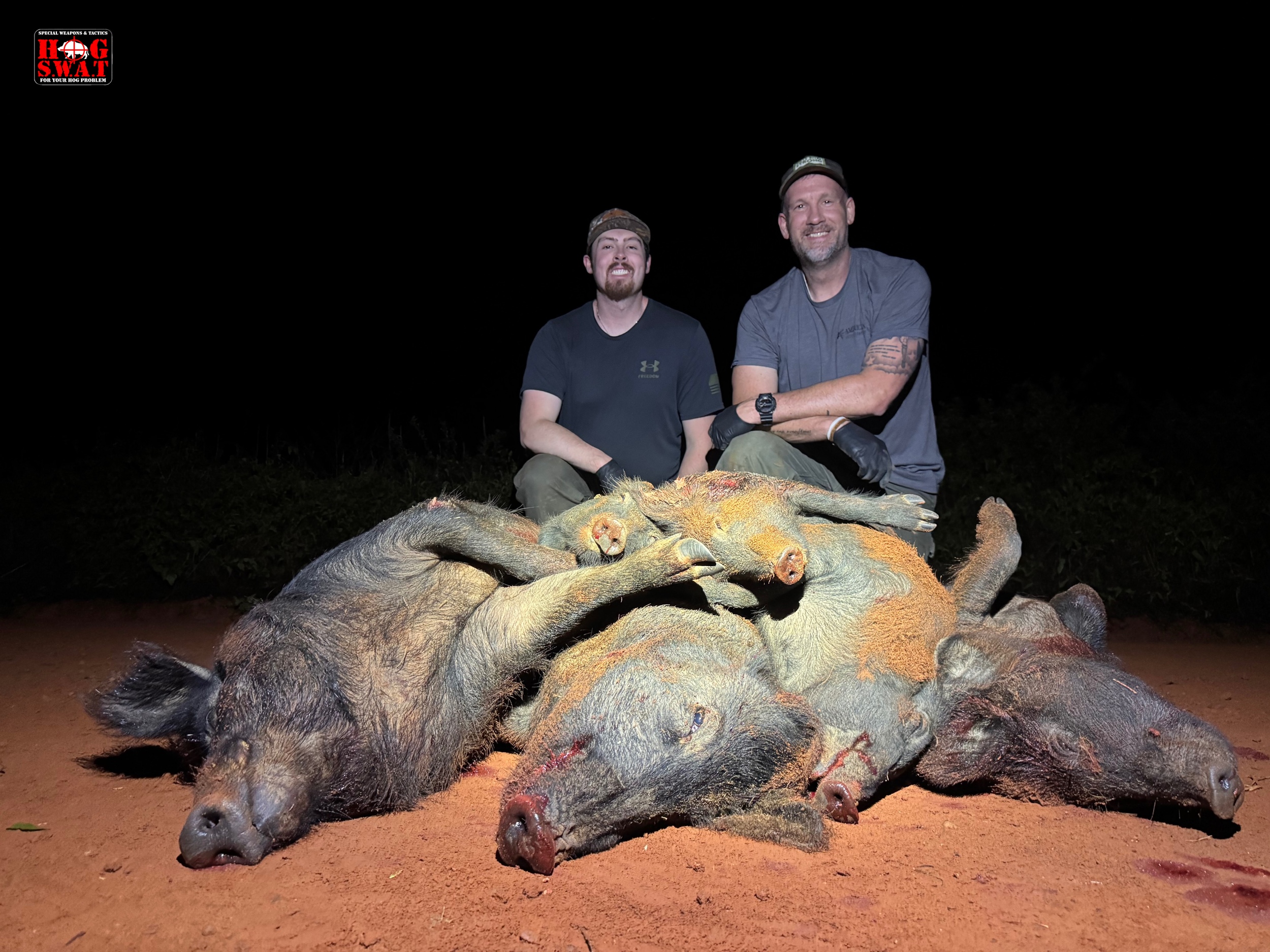
Photo: Georgia Hog Hunting @HogSWAT
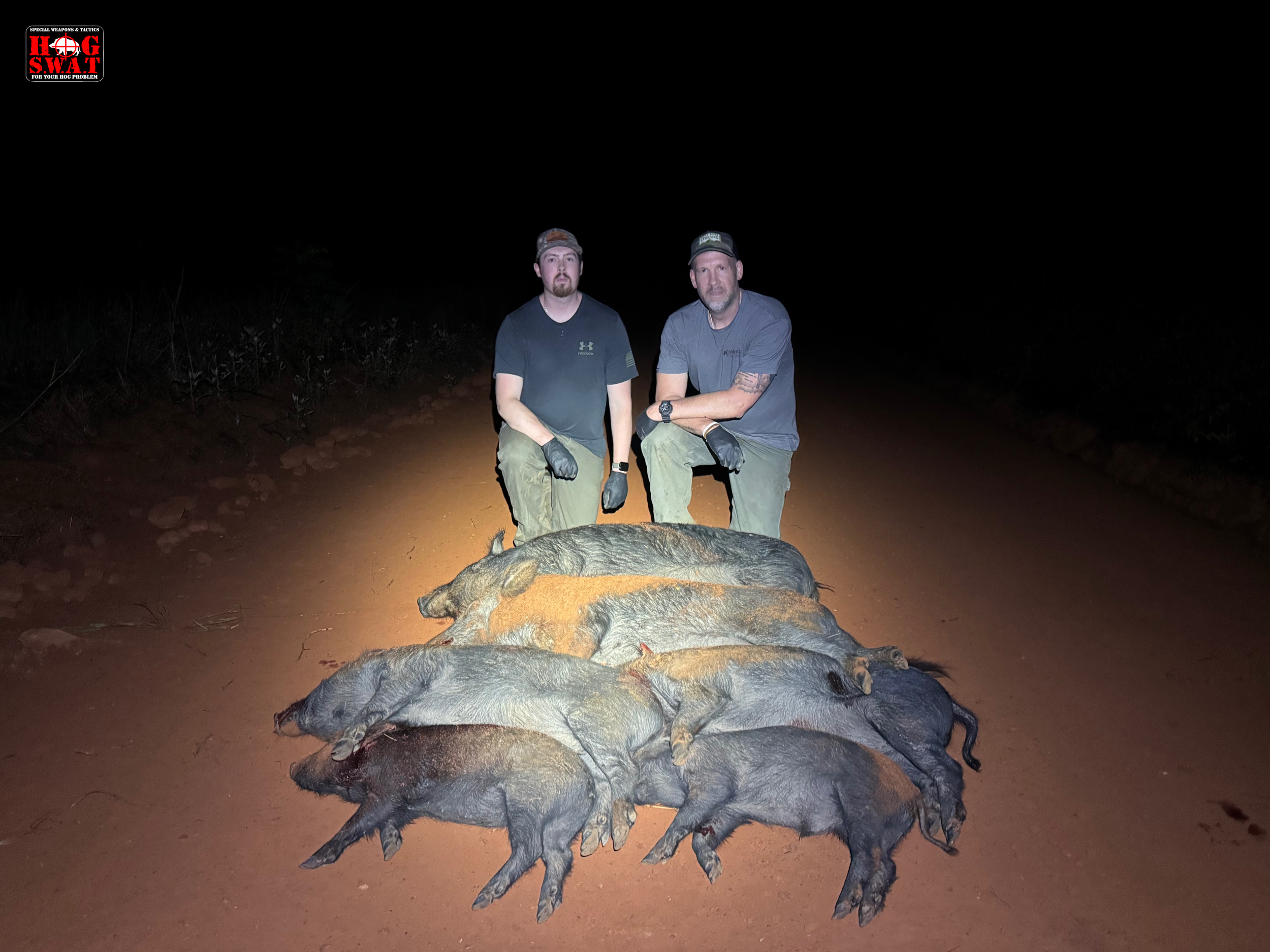
Photo: Thermal Hog Hunting @HogSWAT
We just wrapped up an incredible 2 Night Thermal Hog Hunt here in Americus GA. After a solid first night, the team headed back out to face some challenging conditions. While the evening started slow with heavy fog rolling into the fields, our thermal gear allowed us to cut through and find where the Wild Boars were hiding.
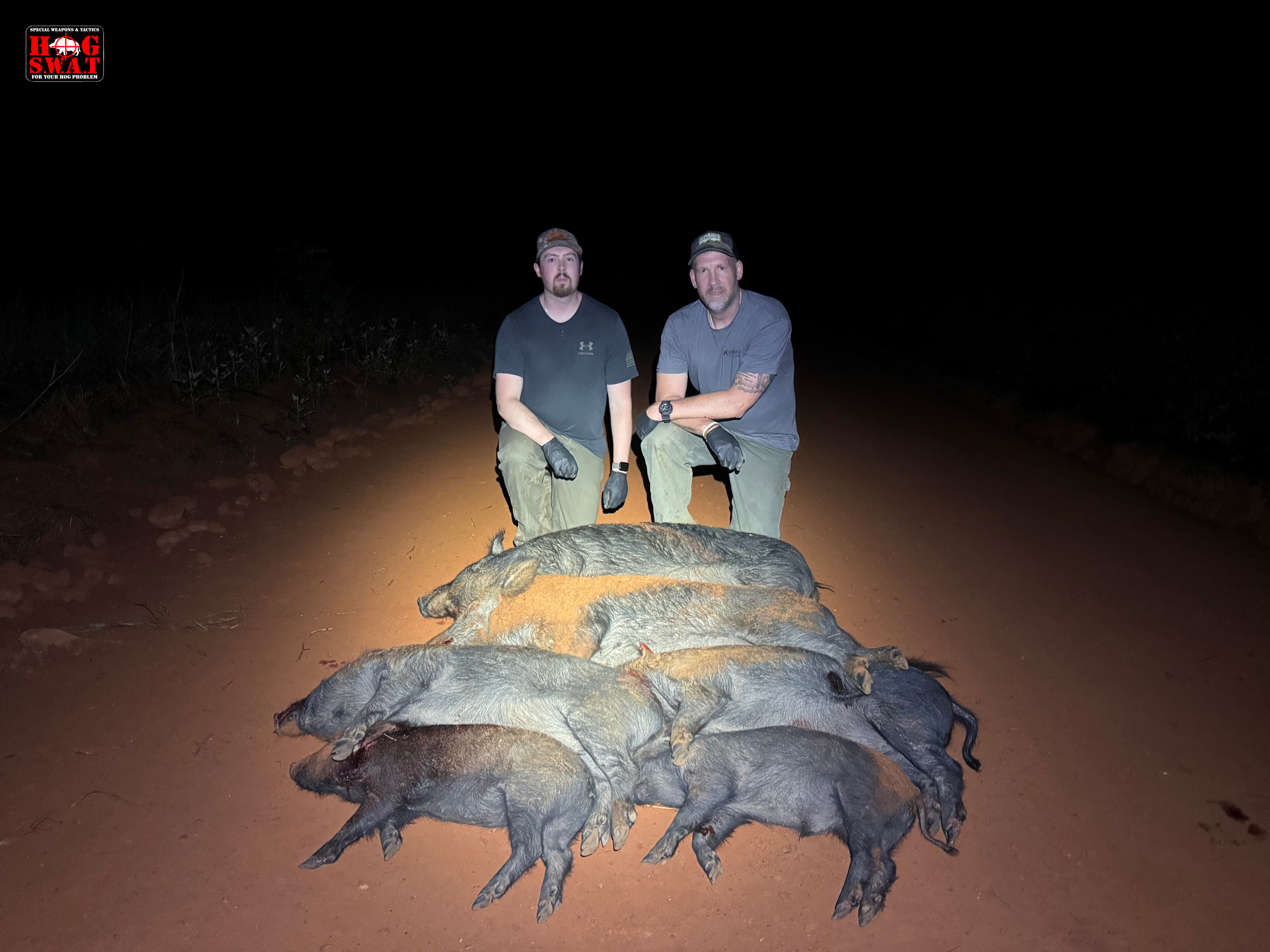
The highlight of this night of Wild Hog Hunting was an intense engagement at one of our southern properties where the team successfully secured 6 pigs in a single go-around. The action was fast-paced, with the group working together to manage the harvest while scouting for the rest of the sounder. Later in the night, a great tip led us to another group of pigs where we added 2 more to the tally, bringing our Night 2 total to 8.
Combined with the 6 hogs from the previous session, this group finished their trip with a total of 14 Wild Hogs harvested! We are extremely grateful we got to take these guys out for the full experience. It was a pleasure having them on the Guided Hog Hunt, and we hope they had a blast with the Best Hog Hunting outfit in Georgia.
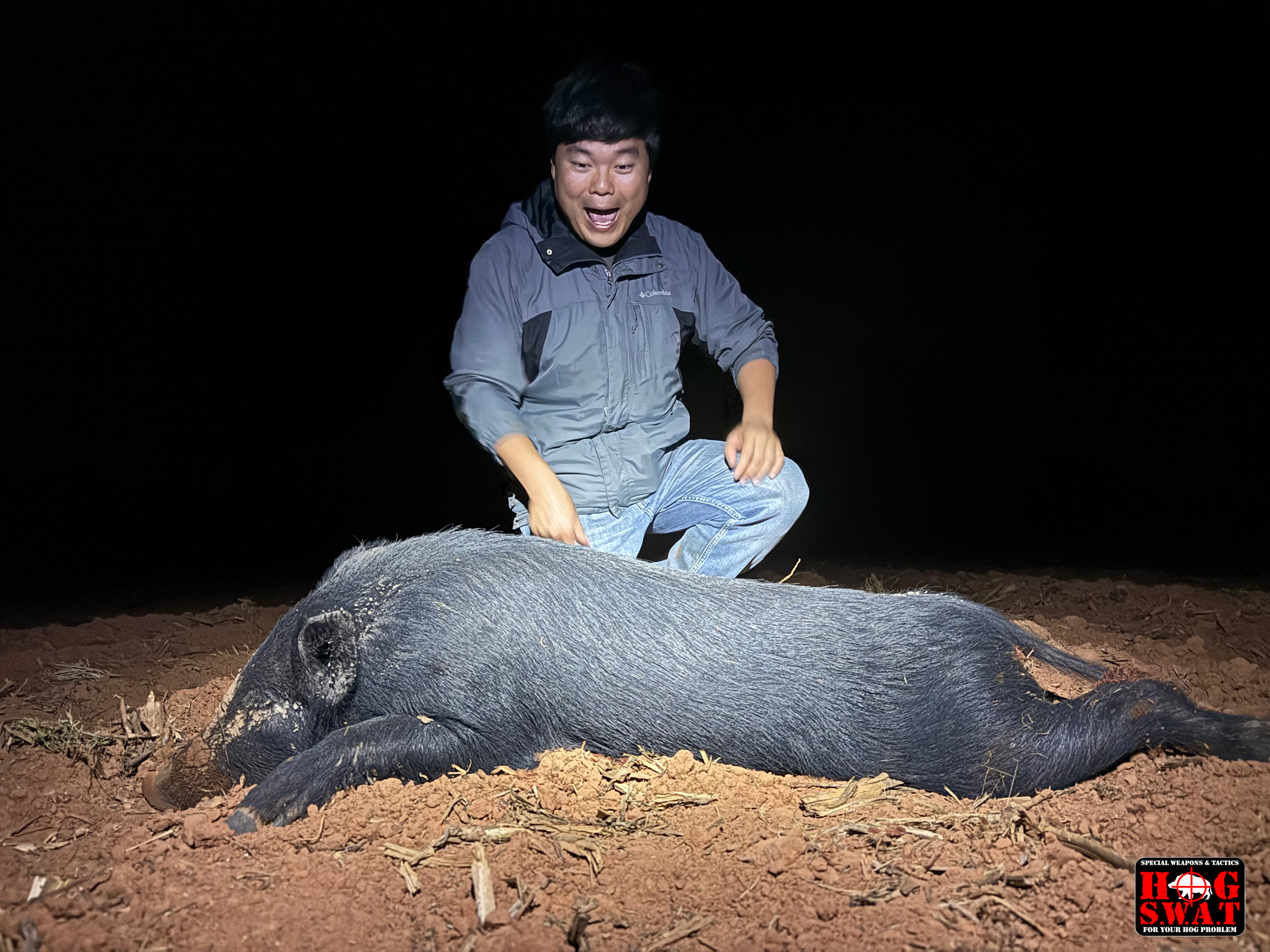
Americus, Ga Hog Hunting
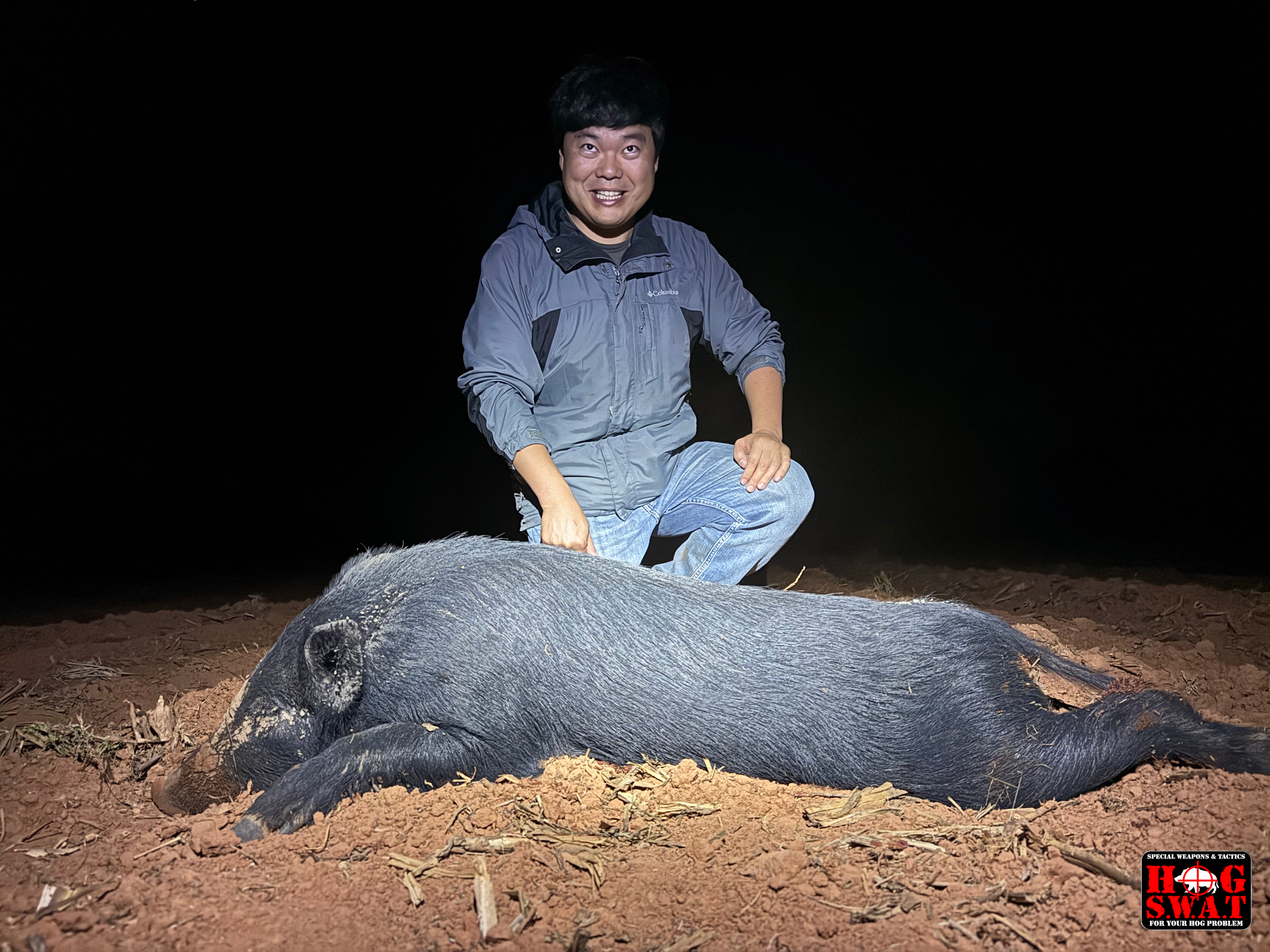
Photo: Georgia Hog Hunting @HogSWAT
The Night Hog Hunting kicked off with plenty of movement as we navigated various terrains in Americus GA. After scouting several properties, we coordinated with Guide Noah to locate a large single boar. Using our AGM Thermal gear, we executed a successful Spot And Stalk Hunting, closing the distance to 100 yards and securing the first harvest of the night.
Later in the shift, we located a sounder of over 10 Wild Hogs positioned in the center of a large field. This setup required extreme discipline; because most of the group was lined up with an irrigation pivot, we had to carefully select targets in a safe chance lane to the left. The team initiated a 400-yard stalk and engaged, successfully tagging their targets during a high-speed encounter.
Despite the late hour, our guests' enthusiasm kept us in the field until past 5:00 AM, checking every possible acre for activity. We are grateful we got to take such a dedicated group out with us. It was a pleasure having them in the field, and we hope they had an unforgettable experience Hog Hunting in Georgia!
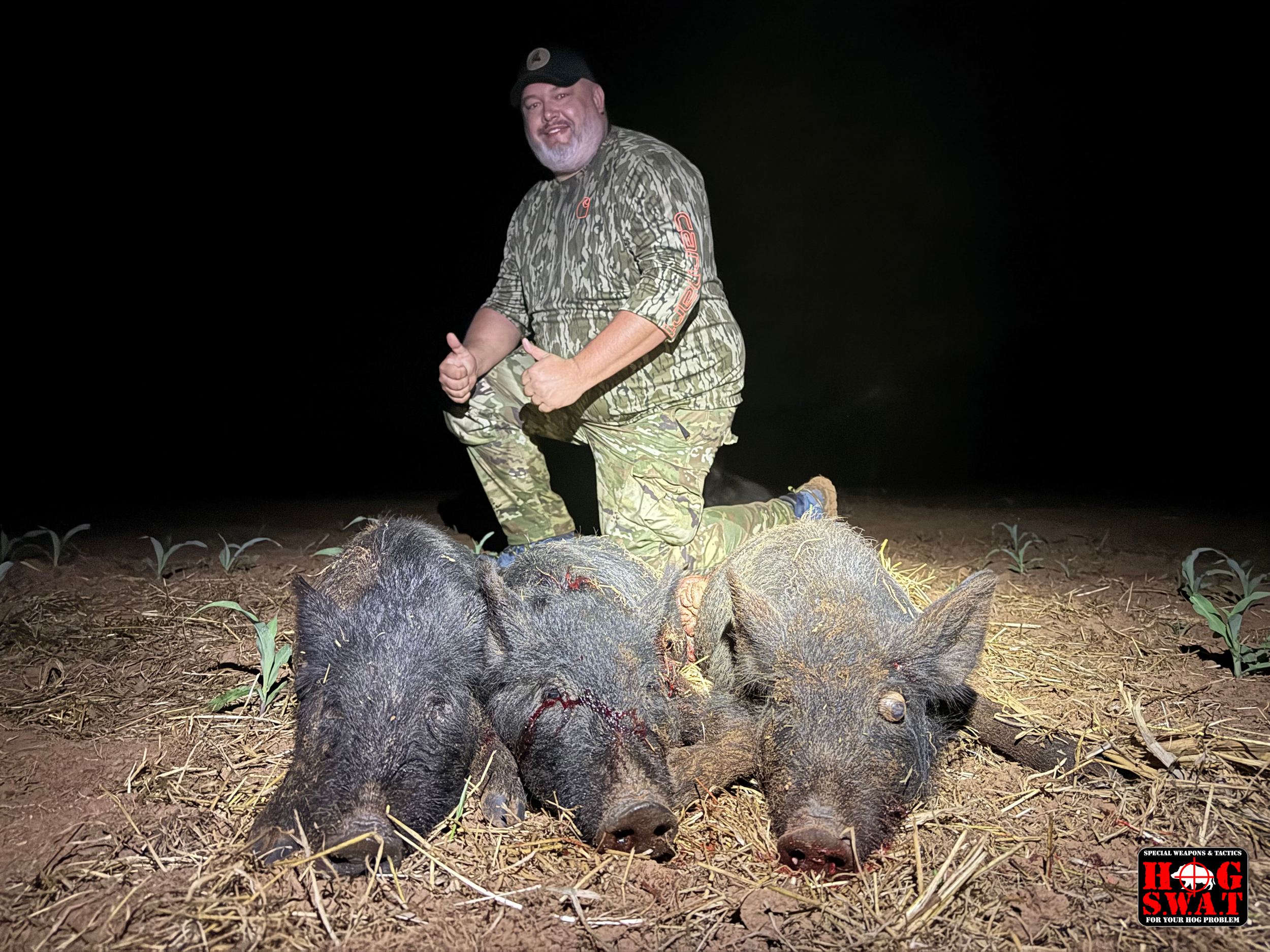
Premier Georgia Hog Hunts
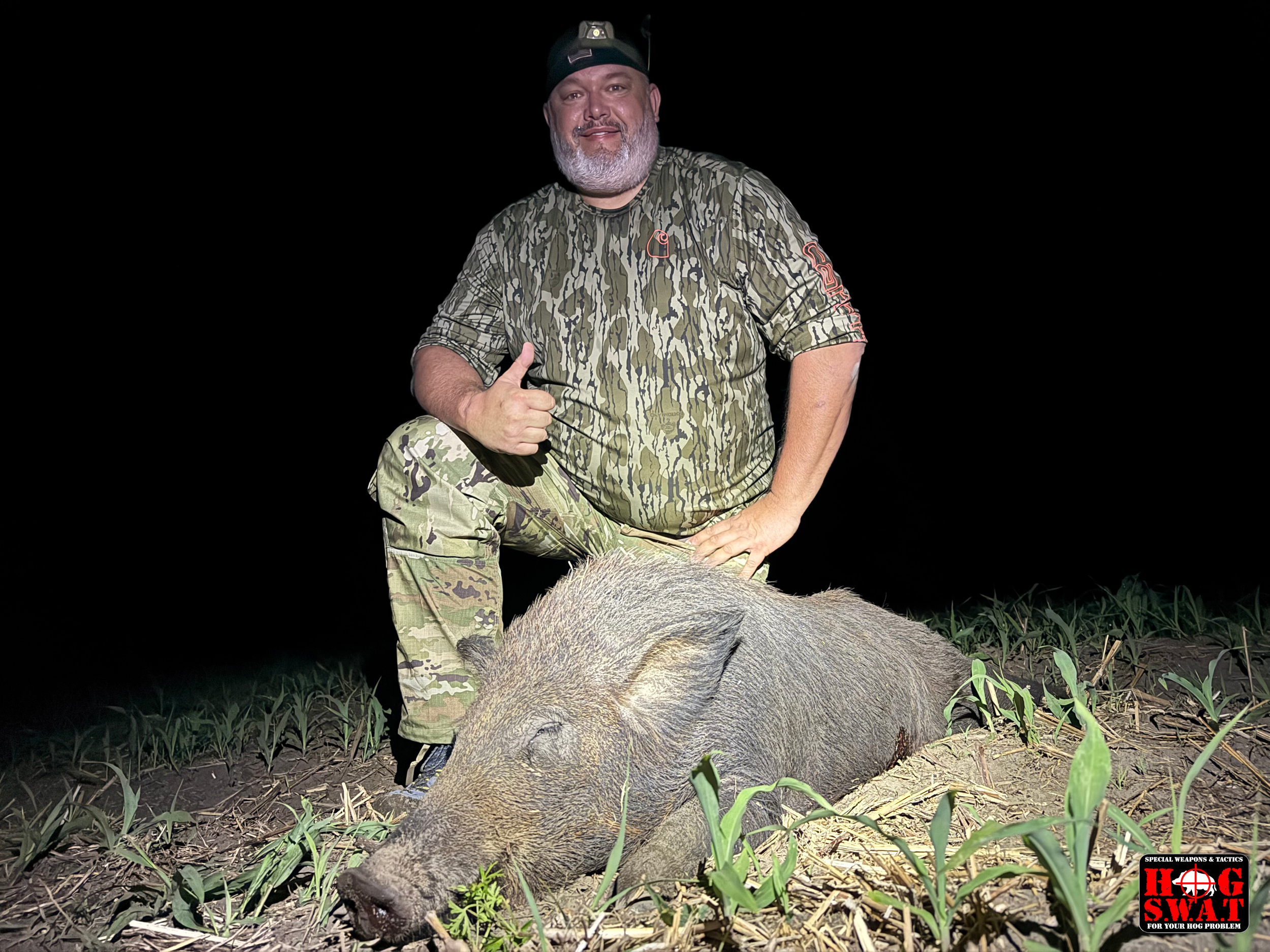
Photo: Georgia Hog Hunting @HogSWAT
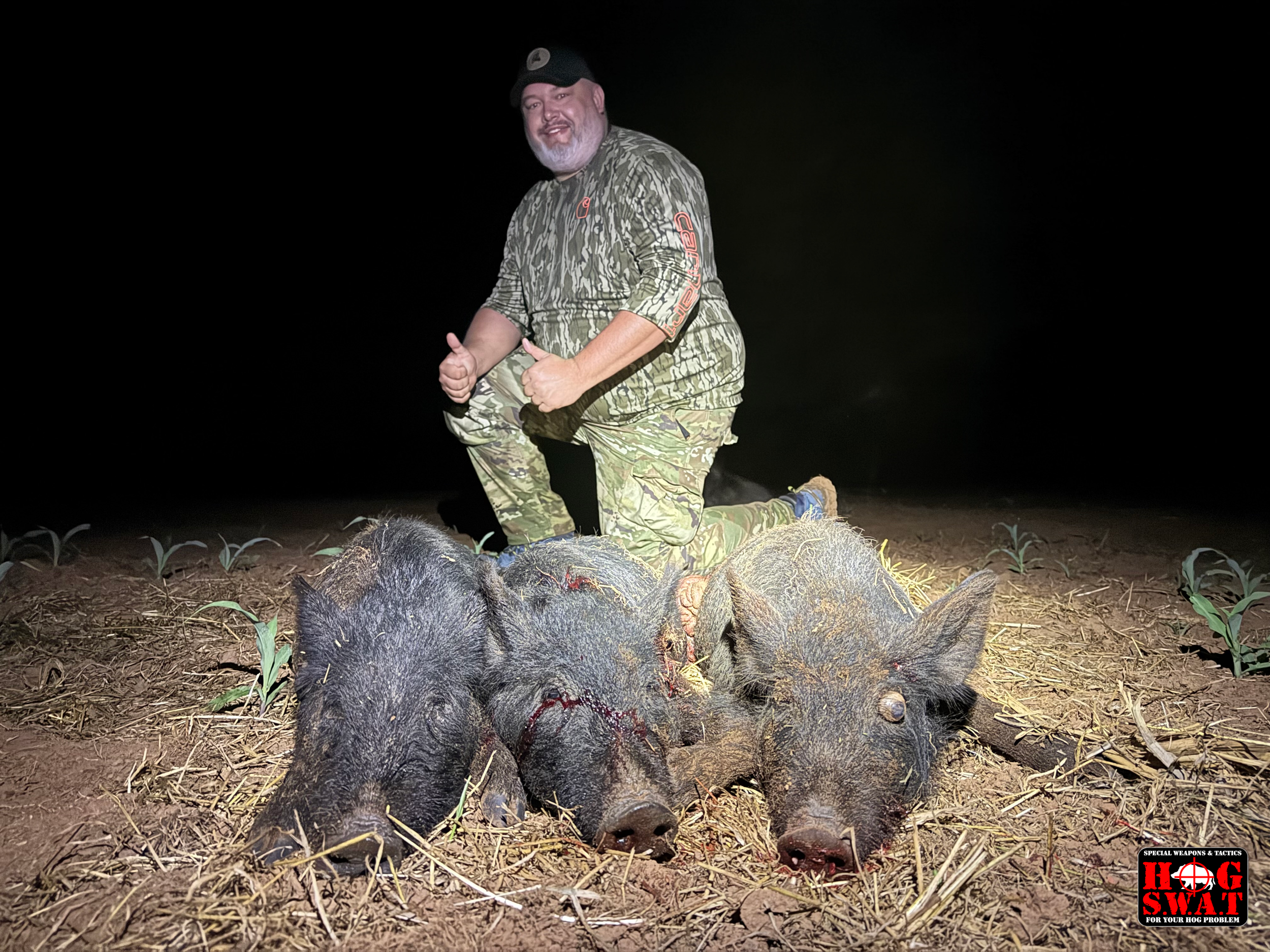
Photo: Nighttime Hog Hunting @HogSWAT
This was an incredible night from start to finish. Our guests were world-class—highly respectful and locked in during the initial range safety briefing. When you have a group this attentive, it makes the Spot And Stalk Hunting process much smoother, allowing us to focus entirely on the Nighttime Hog Hunting strategy.
The night was a marathon of scouting across multiple properties. After securing an initial single boar early in the evening, the team put in the work, navigating through thick grass and various terrains. The highlight of the night was a massive, long-distance stalk. After identifying heat signatures nearly half a mile away with our Thermal, we closed the distance to under 100 yards.
The hunters stayed patient, waiting for the sounder to move into a perfect window. Their precision and persistence in the tall grass resulted in three more successful harvests, bringing our nightly total to four. It was an 11/10 experience, and we are incredibly grateful to have hosted such a great group. We hope they had a blast experiencing the Best Hog Hunting in South GA!
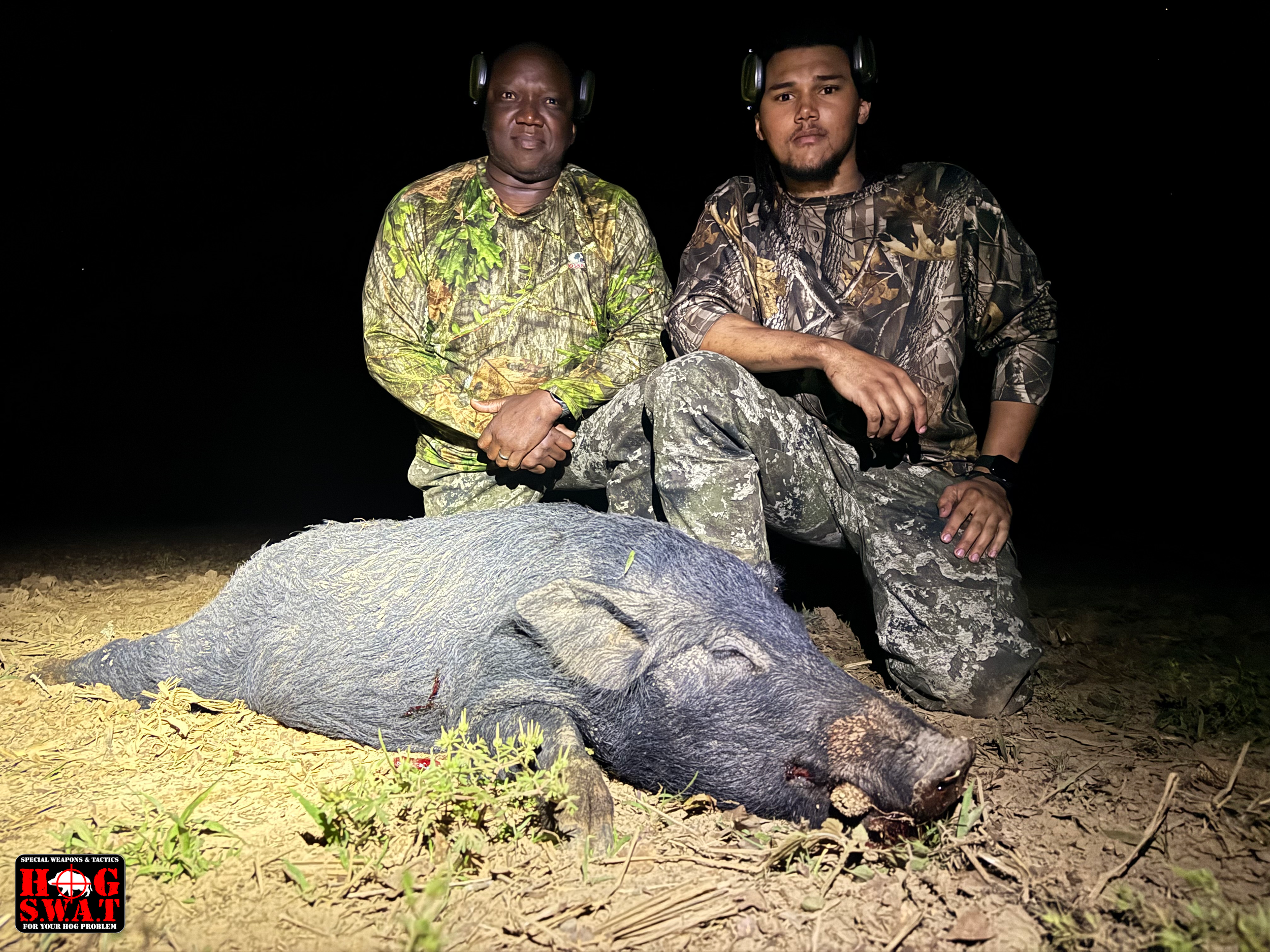
Georgia Thermal Hog Hunting
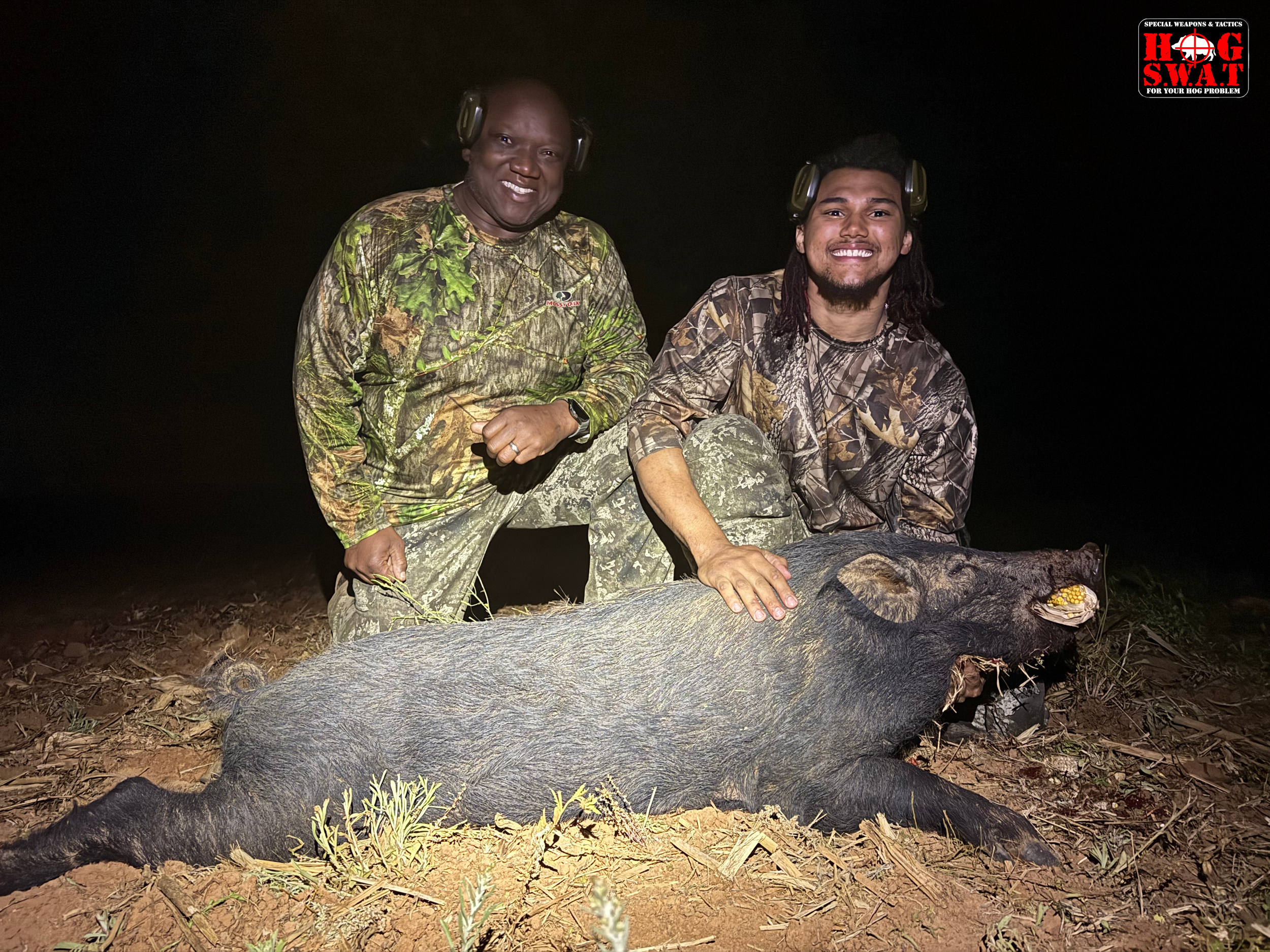
Photo: Georgia Hog Hunting @HogSWAT
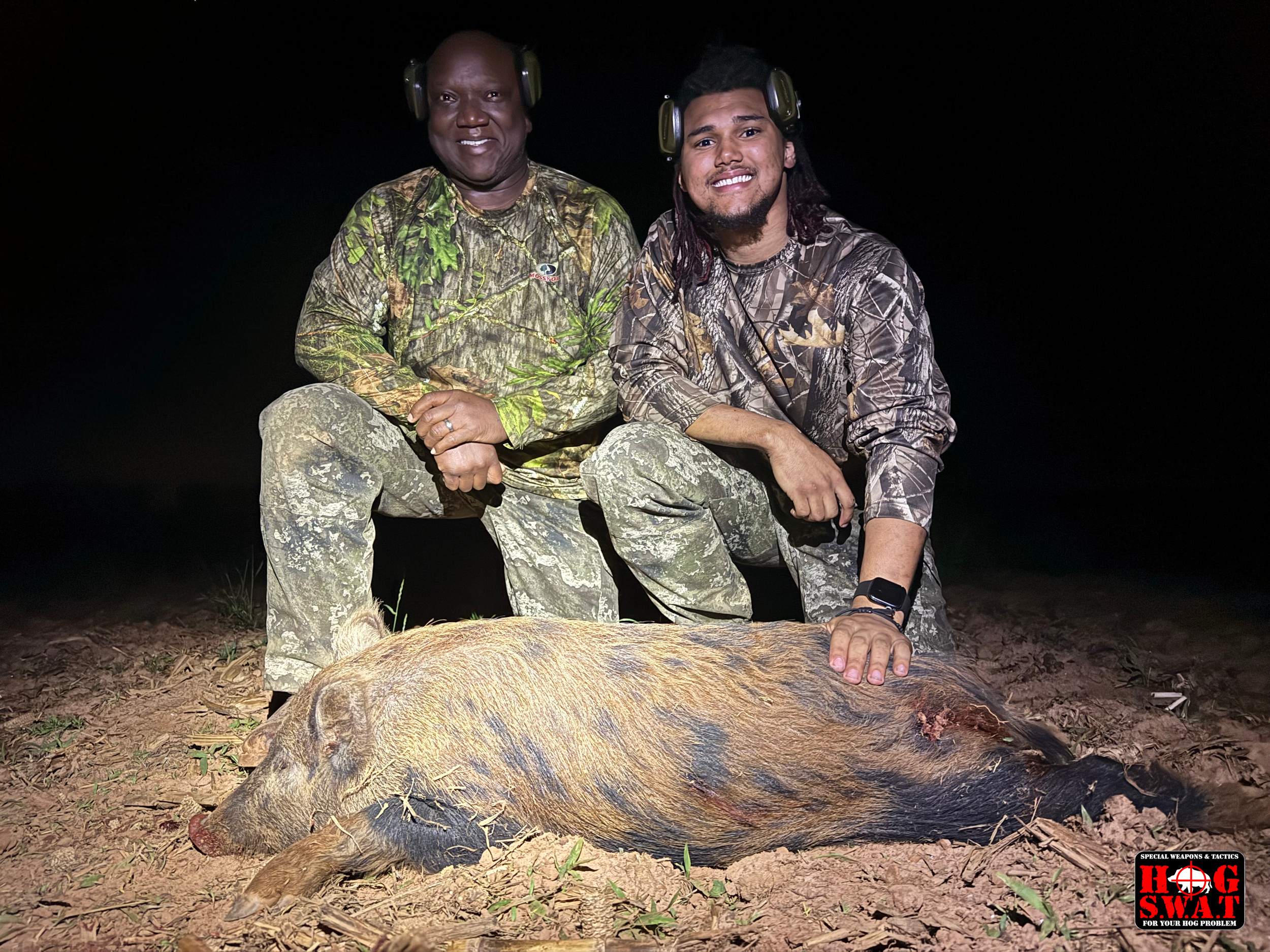
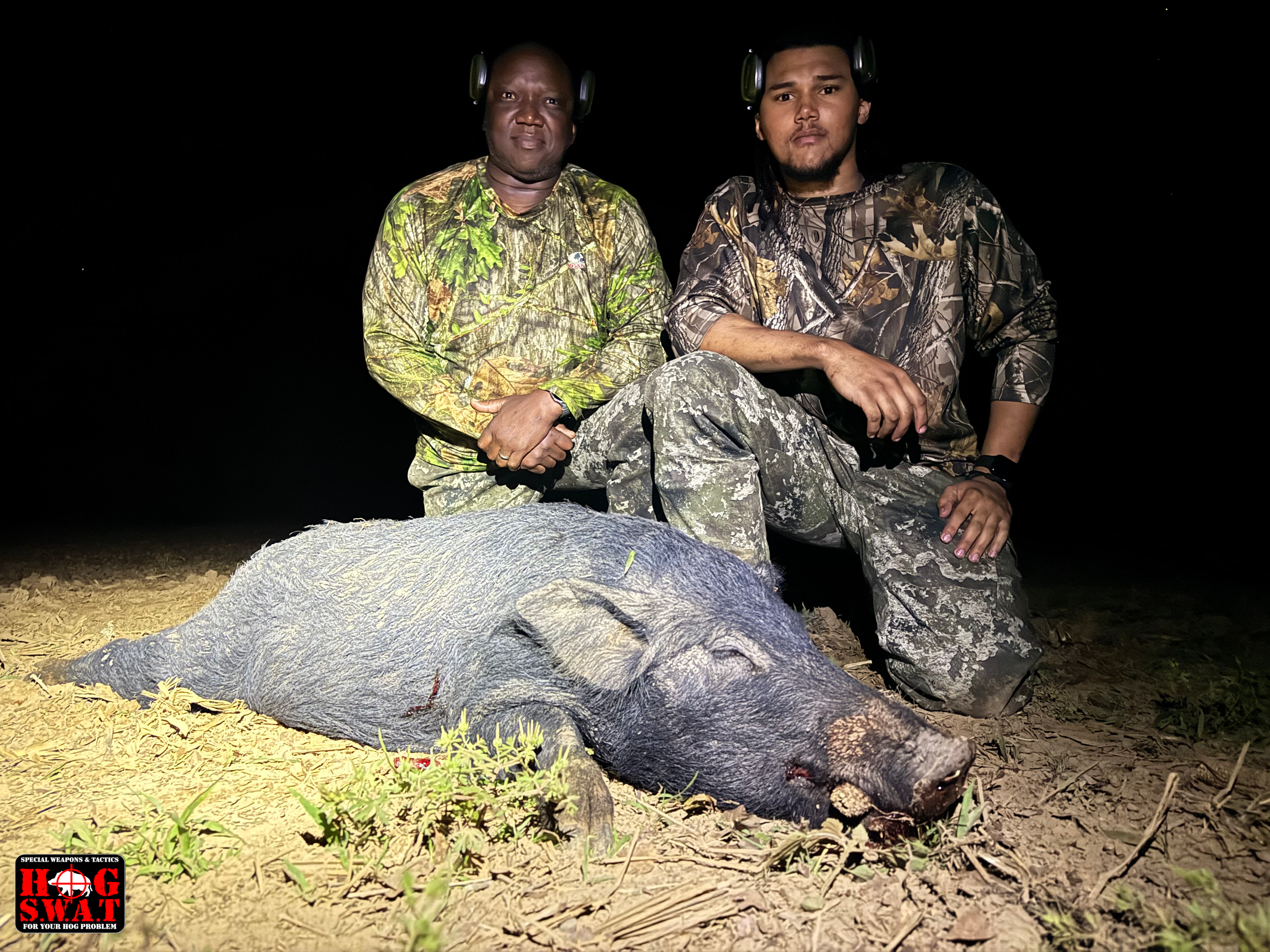
Photo: Wild Hog Hunts @HogSWAT
This is the start of a 2 Night Hog Hunt! This Thermal Hog Hunt started the night with a successful stalk on a single in the north fields, followed by another successful harvest near the woodline at our second location. Using our thermal, we tracked a large sounder that eventually moved onto our property near a pivot system. After waiting for a safe chance window, the team engaged and secured their third pig of the night.
We ended the morning with 3 pigs down! We are extremely grateful we got to take these guys out in the field with us. It was a pleasure having them on night 1 of this Wild Hog Hunt. Let’s see what night 2 brings!
Hog Hunting In Georgia
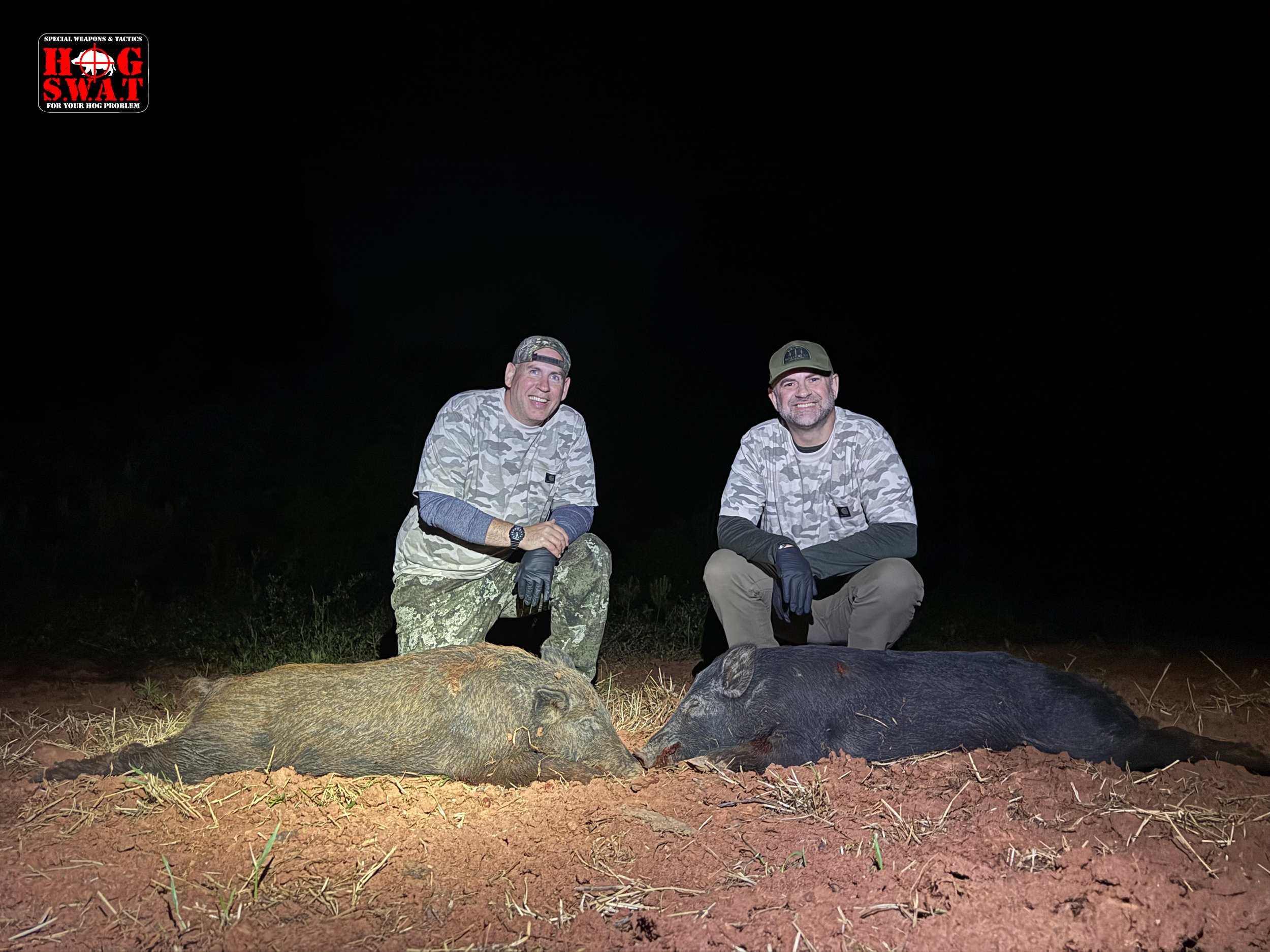
Photo: Georgia Hog Hunting @HogSWAT
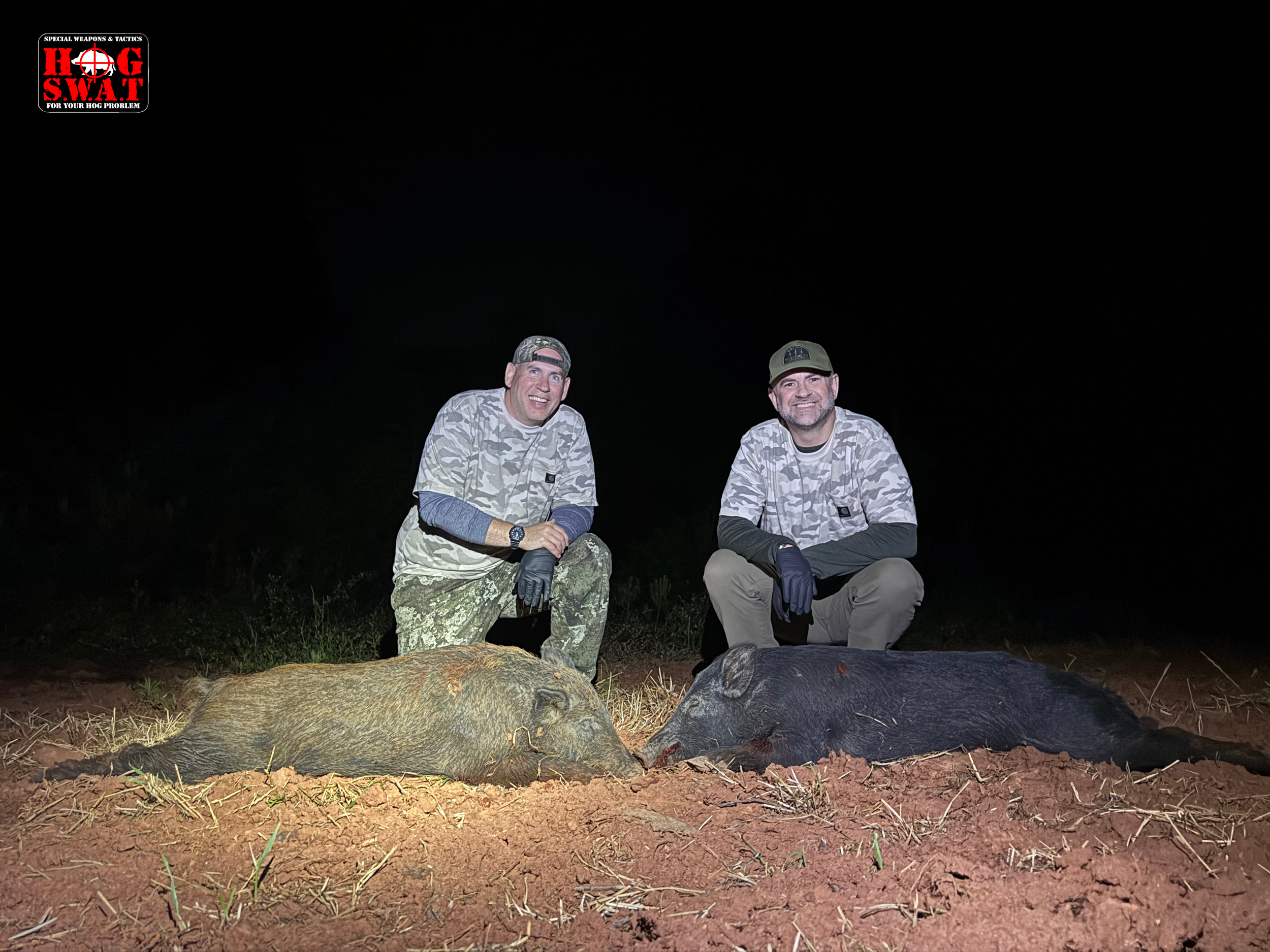
We started the night strong in the first field, where we successfully secured 2 Wild Hogs. We spent the rest of the evening tracking several other sounders across South GA farmland. While the other groups of Wild Boars managed to evade us later in the night, we had some great opportunities and long stalks.
We are extremely grateful we got to take these guys out in the field with us. It was a pleasure having them on the Thermal Hog Hunt, and we hope they had a great time experiencing Hog Hunting in Georgia.
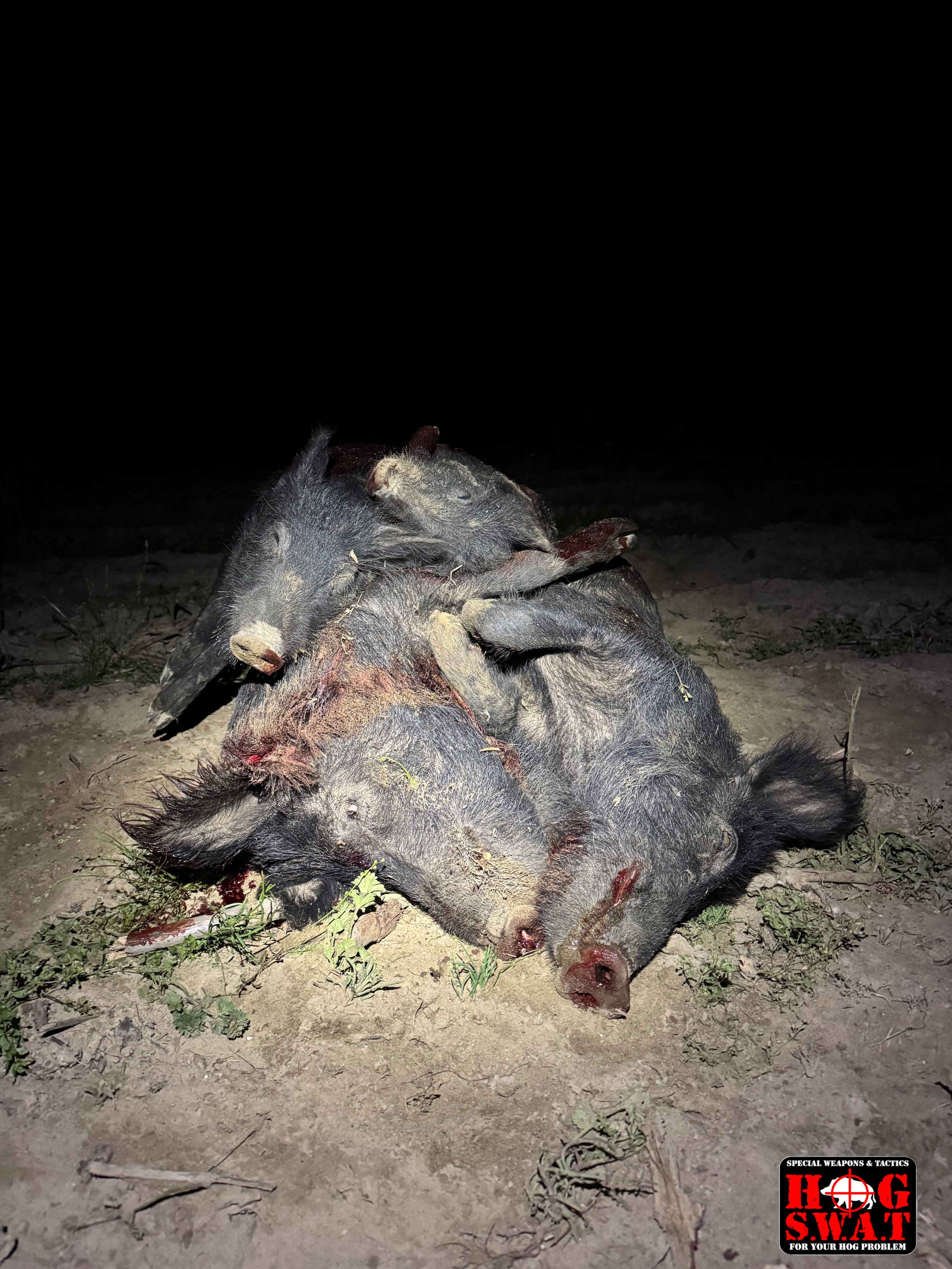
Thermal Hog Hunting In Georgia
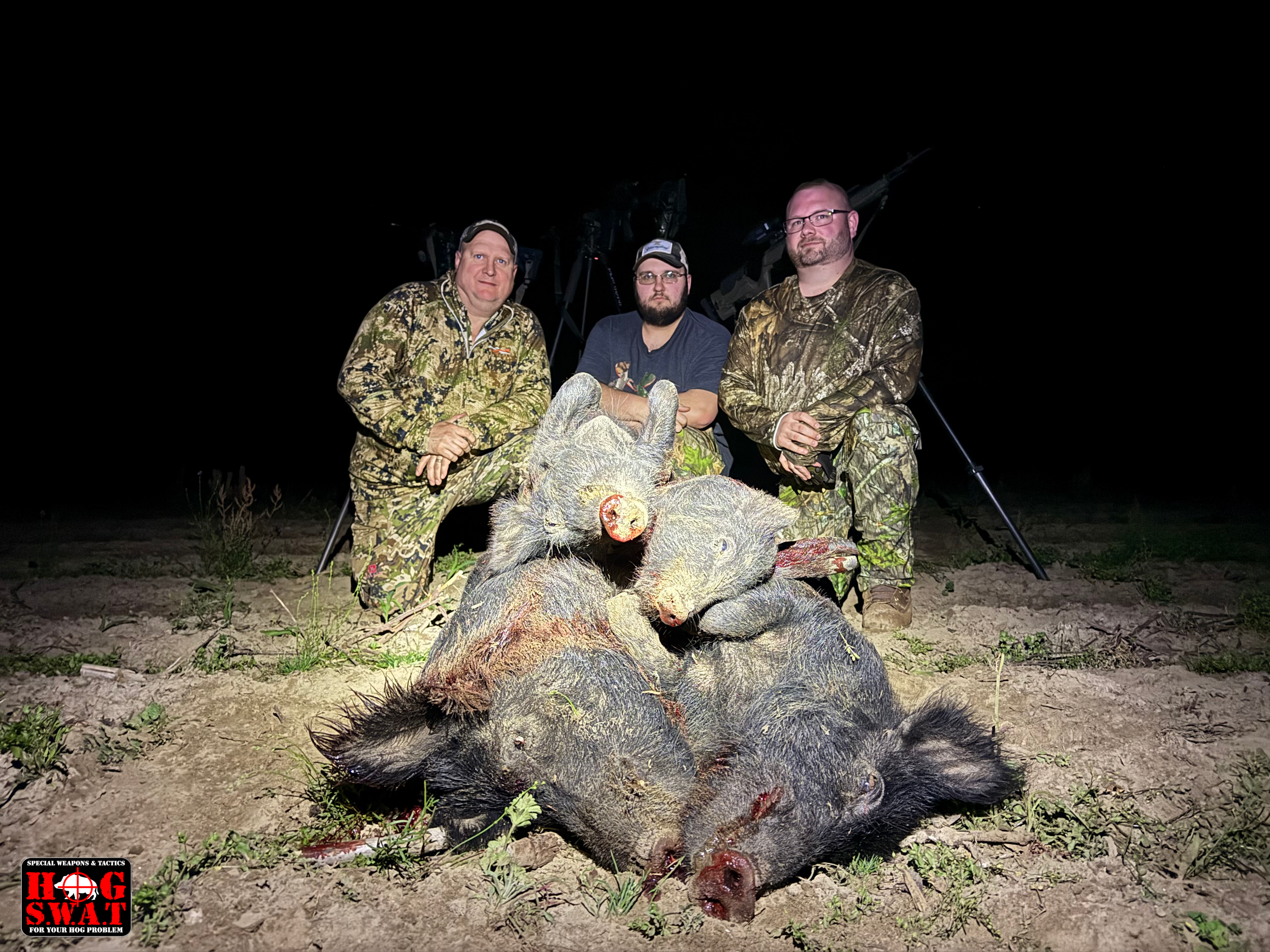
Photo: Thermal Hog Hunting In Georgia @HogSWAT
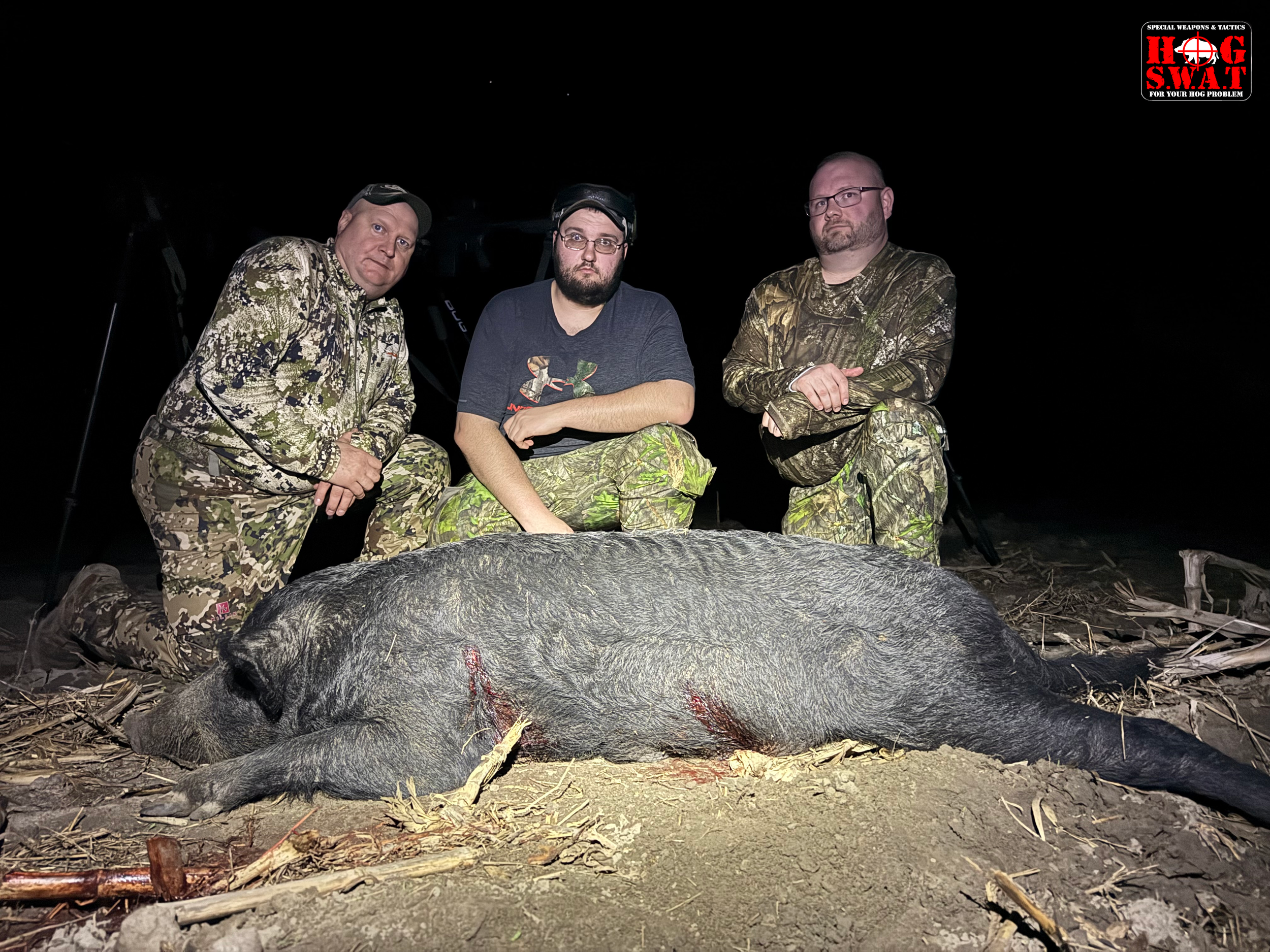
Photo: Hog Hunting Georgia @HogSWAT
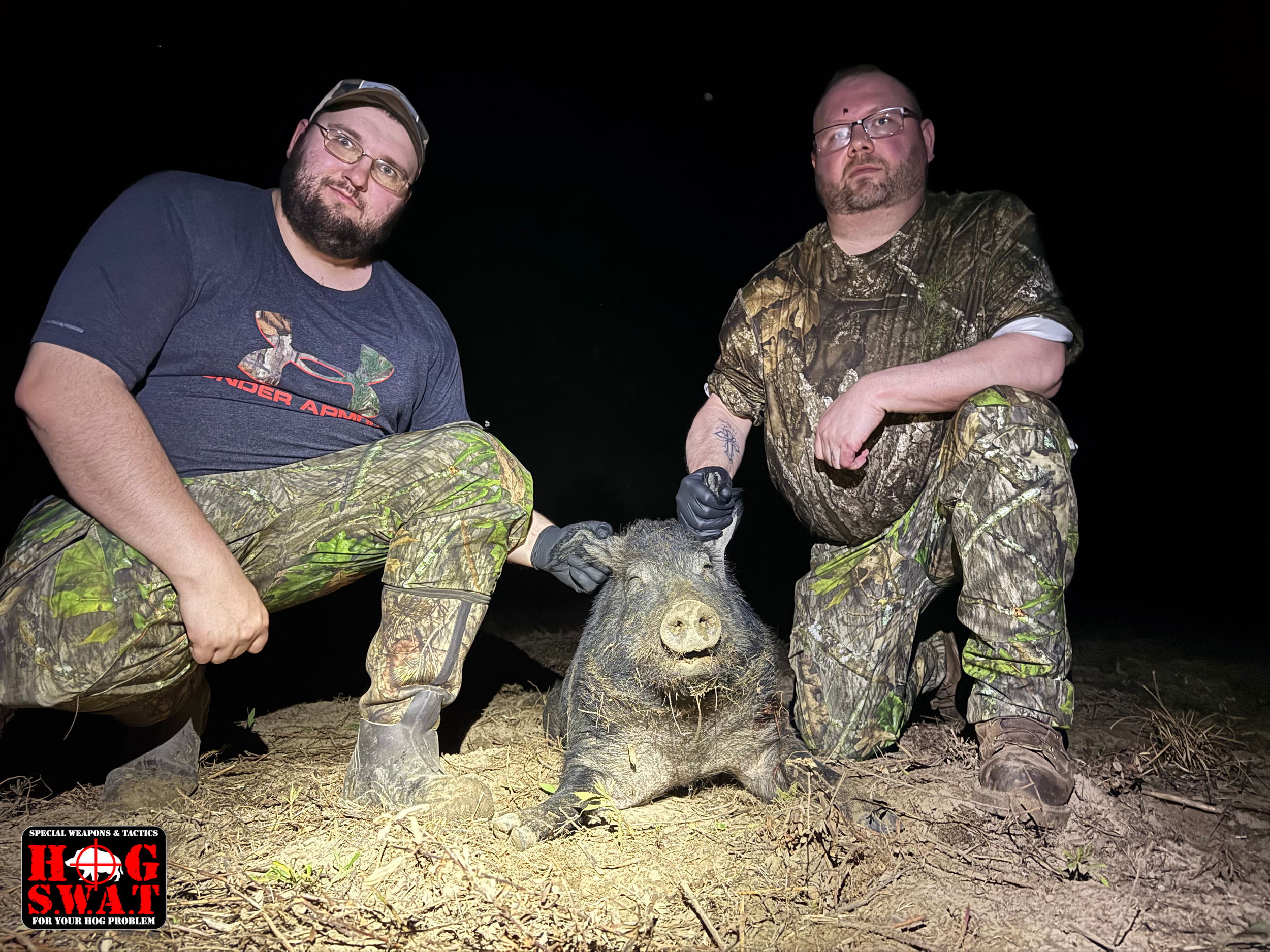
Photo: Nighttime Hog Hunts @HogSWAT
This one-night Hog Hunt in Georgia started with guide Jordan checking the first two fields. On the second field he originally saw nothing, but from the top of the van he noticed some very faint signatures about 1,000 yards out. He decided to investigate the far side of the field.
They walked to where the signatures were and were able to spot the tops of pigs. He grabbed the guys and they stalked toward them, finding a group of about 10 pigs at the field edge. They closed to roughly 100 yards and took our first chance — one pig dropped. Two more were picked off on the run. The fourth was an injured pig that settled on the right side of the field; they finished it there. After taking pictures and butchering the pigs, they checked a few more fields and saw nothing.
Next they checked the field northwest of that one, which had been absolutely destroyed by Wild Hogs. They spotted a single pig and took care of business from about 100 yards. Then parked the van between two fields and walked the circular field, where he spotted a lone hog about 800 yards from the van. Jordan brought the team back; only two shooters thistle. They set up at roughly 100 yards and were confident the pig would fall with one chance. The first chance didn’t drop him; he ran toward the woods, but before he reached cover, one hunter made an excellent leading chance and dropped the hog — exactly as Guide Jordan taught: place the outer edge on the nose and lead a running hog correctly.
They took pictures, and checked a few fields and finally headed home. In total, six pigs were taken on this Thermal Hog Hunting trip with Hog S.W.A.T. We hope the guests had a great time and that they’ll come back. Book your Wild Hog Hunt with Hog S.W.A.T. today!
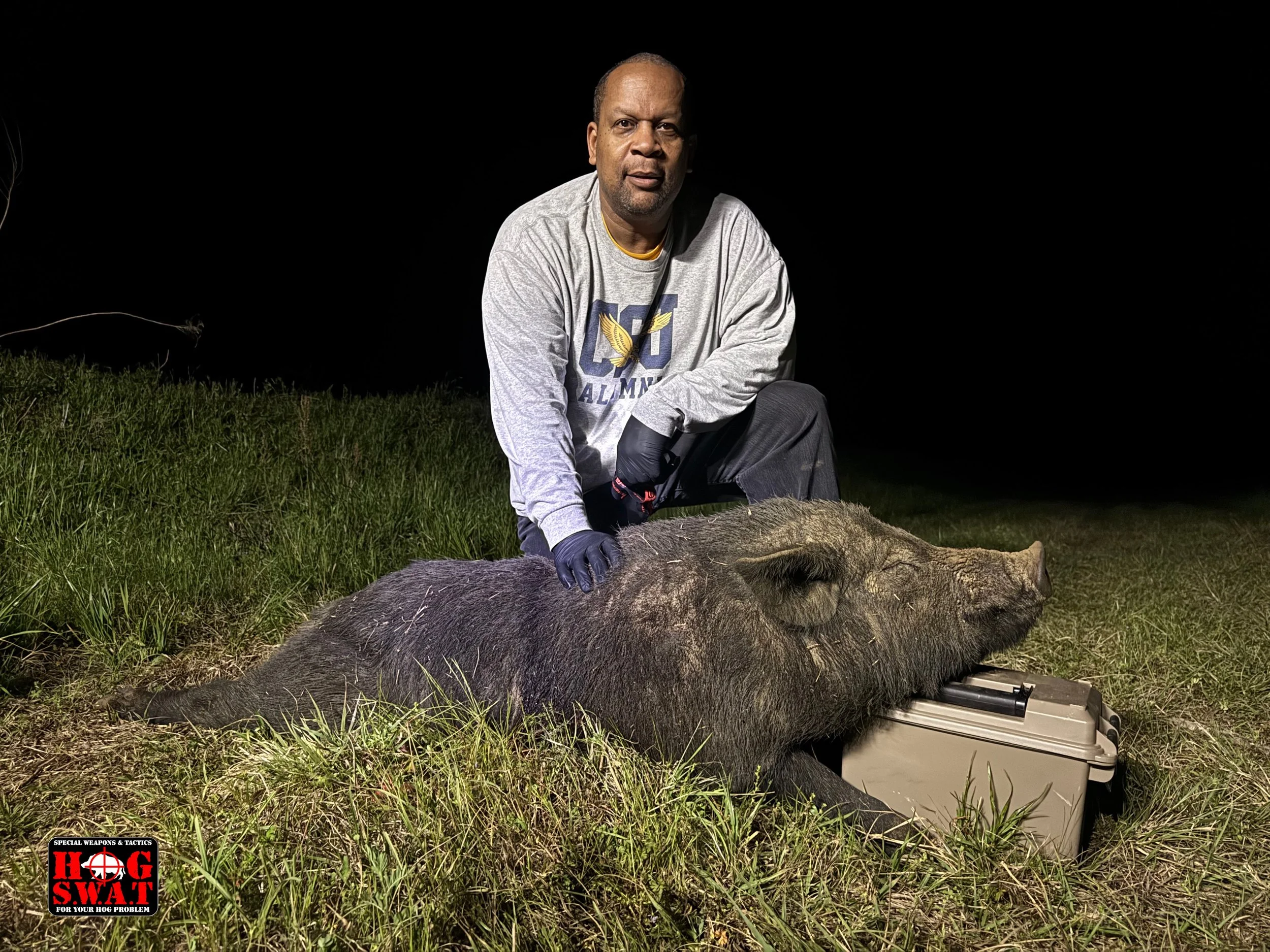
Georgia Hog Hunting
Hunt Summary
Lead Guide: Noah
Hunt Type: 1 Night Hog Hunt (Solo Session)
Harvest Total: 2 Wild Hogs
Equipment Used: AGM Thermal Optics
Location: Preston Field and Sheriffs Field, Americus, Georgia
The Ultimate Solo Hog Hunt
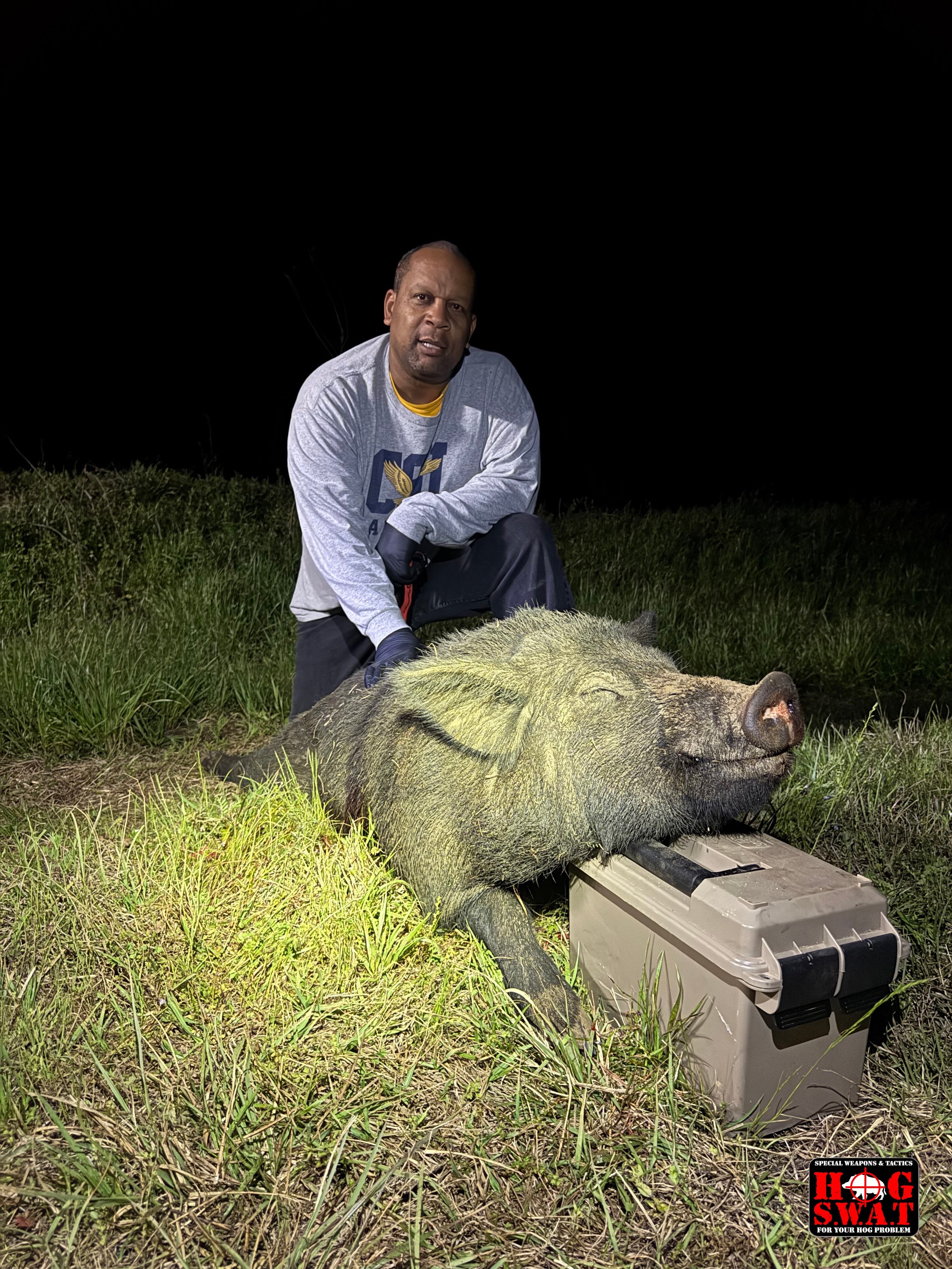
Photo: Hog Hunting In Georgia @HogSWAT
At Hog SWAT, we believe everyone should have the chance to experience the Best Hog Hunting in the United States. While we often host large groups of up to 20 people, we also offer specialized Solo Hog Hunts sessions. For these exclusive Hog Hunting Trips, we are happy to take out a single hunter with the understanding that the booking is processed as a two-person minimum. This ensures you get the full, dedicated expertise of our guides and the best Unlimited Hog Hunting experience possible.
Hog Hunt Starting Strong
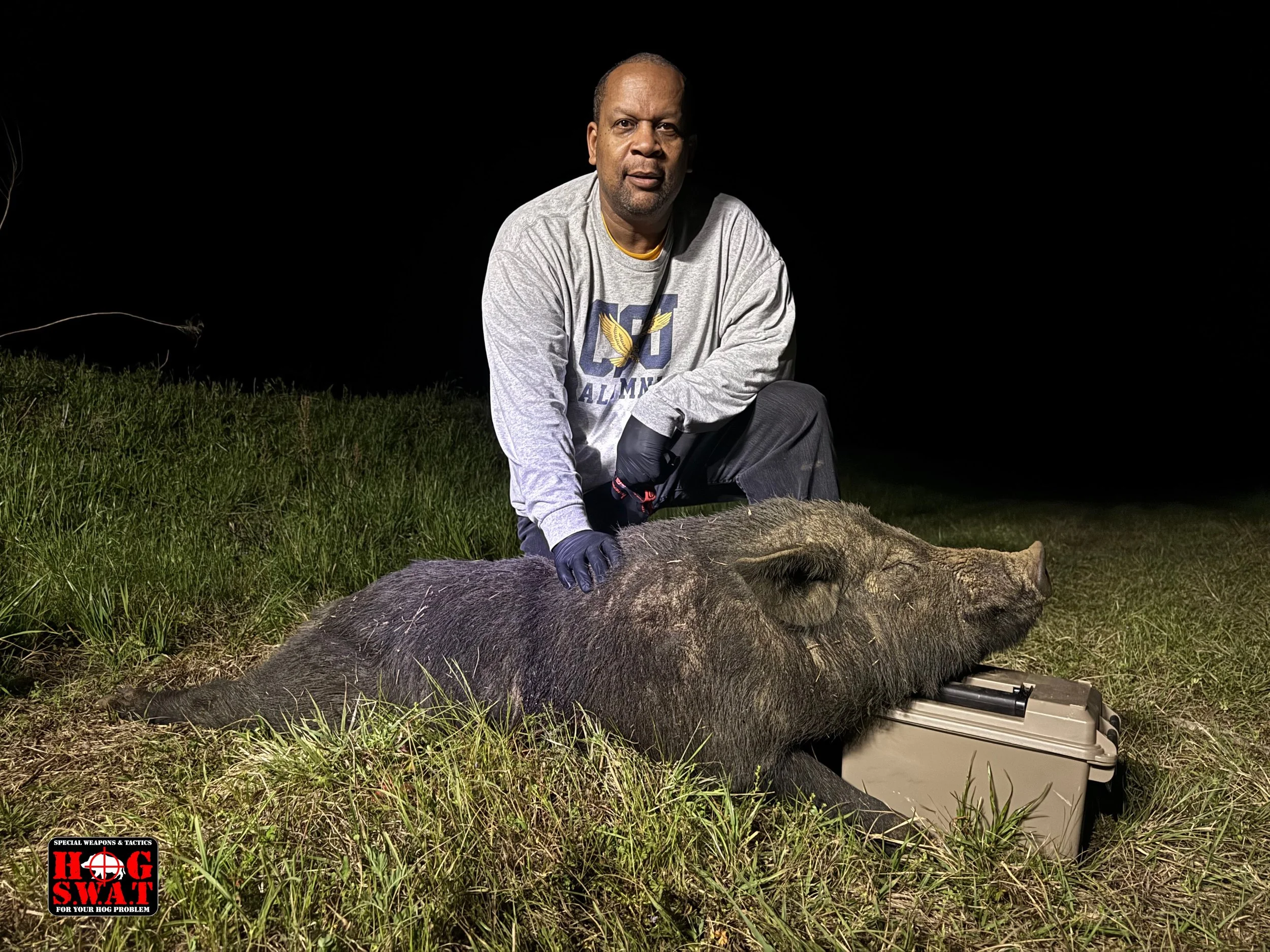
Photo: Georgia Boar Hunting @HogSWAT
Guide Noah started the night at Preston Field under a bright 1/4 moon. Despite the extra light, the team used the terrain to stay hidden. They spotted two Wild Hogs right at the start of the night. Using a high-precision Spot And Stalk, they moved within 100 yards. The hunter stayed calm and successfully secured the first harvest of the night—a great start to this Georgia Hog Hunting trip.
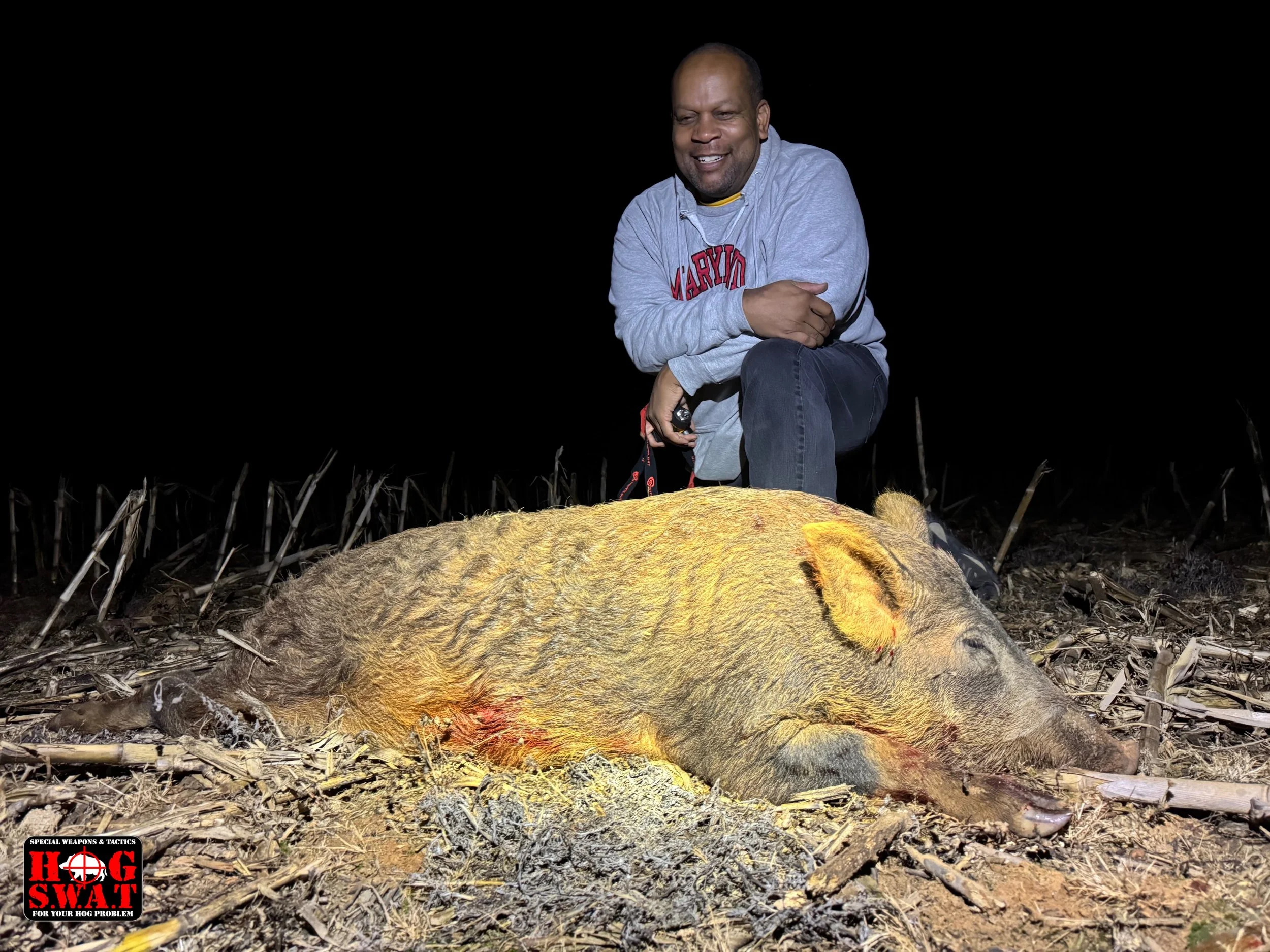
Photo: Thermal Hog Hunting @HogSWAT
After checking 3 fields, the team moved toward another Field. This was a true test of stealth. With no moonlight but plenty of noise from the dry corn stalks, Noah led a massive 1,000-yard stalk, cutting the distance down to just 50 yards! The team engaged a large sounder and successfully secured another harvest.
Ending the Morning with a Bang
The night took a brief tactical turn as Noah stopped to assist Guide Jordan with a vehicle recovery (proving once again that the Hog SWAT team always has each other's backs!). Afterward, the team headed to Israel’s field for two more opportunities. While the Wild Boars in those fields were elusive and managed to evade the group, the adrenaline was high until the very end.
It was a successful solo 1 Night Hog Hunt that proved why Thermal Hog Hunting is the most exciting way to experience the Georgia outdoors.
Nightly FAQ
Q: Do you offer solo hunts for Wild Boar Hunting? A: Yes! We love hosting solo hunters. To cover the costs of the guide, fuel, and AGM Thermal equipment, solo hunts are booked at the same rate as a two-person party. This gives you a private, one-on-one Guided Hog Hunting experience. You can Learn More About Rates and Packages here.
Q: What is the best time of year for Georgia Hog Hunting? A: Wild Hogs are active year-round in South GA! Because we hunt at night using thermal technology, we can find them in almost any season. If you are wondering what gear you should bring for the current weather, check out our What To Bring guide.
See how this hunt with "[Persistence in the South Georgia Mud | Nighttime Hog Hunting Success]" compares to Noah's solo victory!
[BOOK YOUR PRIVATE HOG HUNT NOW - LINK]
Night Hog Hunt In Georgia
Hog Hunt Summary
Lead Guide: Jordan
Hunt Type: 1 Night Hog Hunt
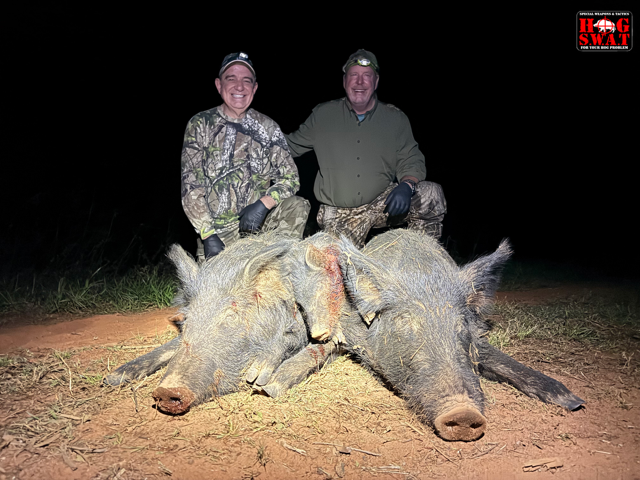
Harvest Total: 3 Wild Hogs
Equipment Used: AGM Thermal
Location: Harry Field & 34 Field, Americus, Georgia
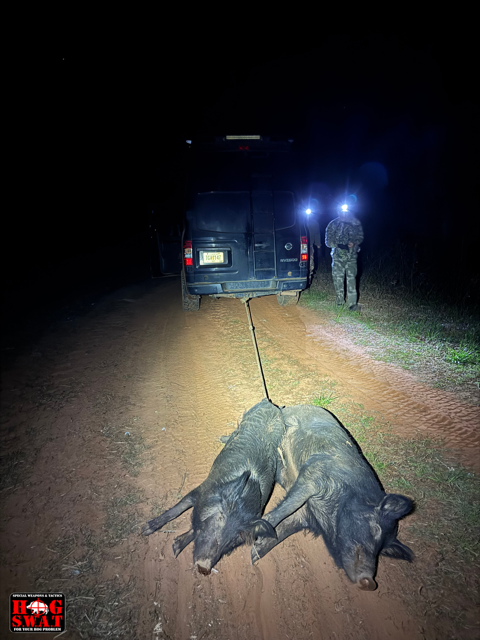
Photo: Georgia Boar Hunting @HogSWAT
When it comes to Guided Hog Hunting, the equipment is only half the battle—the other half is patience and stealth. On a recent 1 Night Hog Hunt led by Guide Jordan, our guests got a front-row seat to how we use professional tactics and terrain to our advantage in South GA.
The Hog Hunting Stalk
The night began with an extensive scout of a few fields. While things were quiet early on, the momentum shifted at the next field. Just as the team reached a high point, the top-mounted AGM Thermal picked up a group of over five Wild Hogs feeding in a low spot about 150 yards away.
One of the pigs was alert, watching the van closely. Jordan’s experience was key here—he kept the vehicle perfectly still, allowing it to blend into the environment until the sounder settled back into feeding. This allowed the group to safely exit, gear up, and begin a precise Spot And Stalk. After closing 50 yards of distance on foot, the team set up their thermals.
Securing the Harvest in South GA
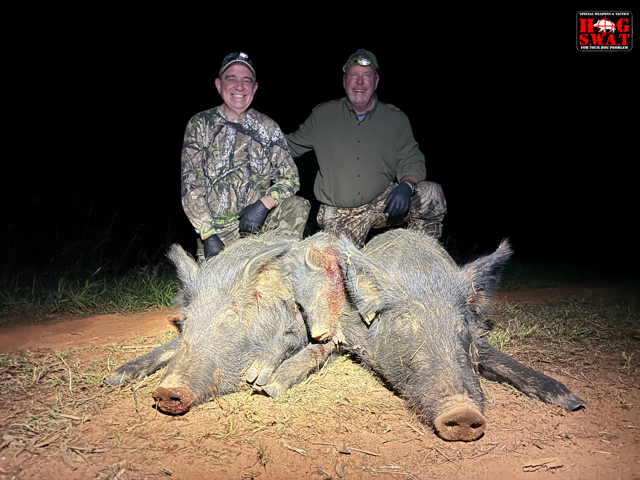
Photo: Hog Hunting Georgia @HogSWAT
Despite the adrenaline of a fast-moving sounder, the team stayed focused on the task. After the initial engagement, several Wild Boars moved across the field. Through quick coordination and follow-up tracking, the group successfully secured multiple harvests.
Jordan’s expertise was vital in tracking down and recovering the animals in the tall grass and nearby ditches, ensuring a successful night for the guests. This kind of high-intensity Nighttime Hog Hunting is why we are considered the Best Hog Hunting outfitter in the United States. We ended the night checking Israel and Field 34 before the team called it a night at 2:30 AM, exhausted but successful.
Nightly FAQ
Q: Do I need to be an expert to join a Guided Hog Hunting trip? A: Not at all! Whether it is your first time Hog Hunting In Georgia or you are an experienced hunter, our guides go over everything at the range. We teach you how to use the tripods and AGM Thermal to ensure you are comfortable before we ever step into a field. You can Learn More About What To Bring to help you prepare.
Q: Why is the "Spot And Stalk" method better than hunting from a stand? A: Spot And Stalk Wild Boar Hunting allows us to cover thousands of acres in a single night. Instead of waiting for the pigs to come to us, we use technology to find them. This results in the Best Hog Hunting success rates and a much more exciting experience. Feel free to Learn More About How We Hog Hunt.
BOOK YOUR 1 NIGHT HOG HUNT NOW.
Learn about our 2 Night Hog Hunt.
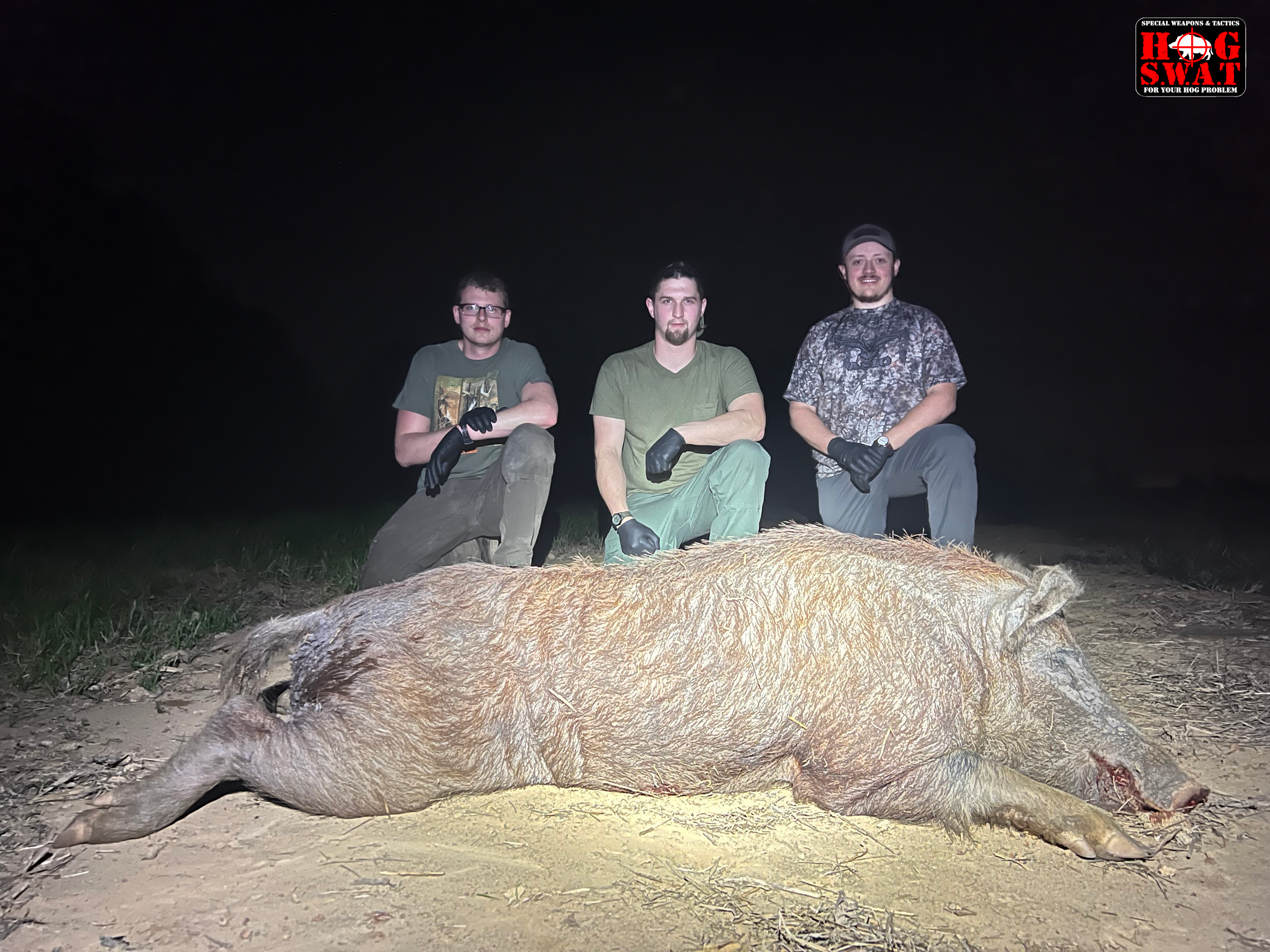
Large Group Hog Hunts
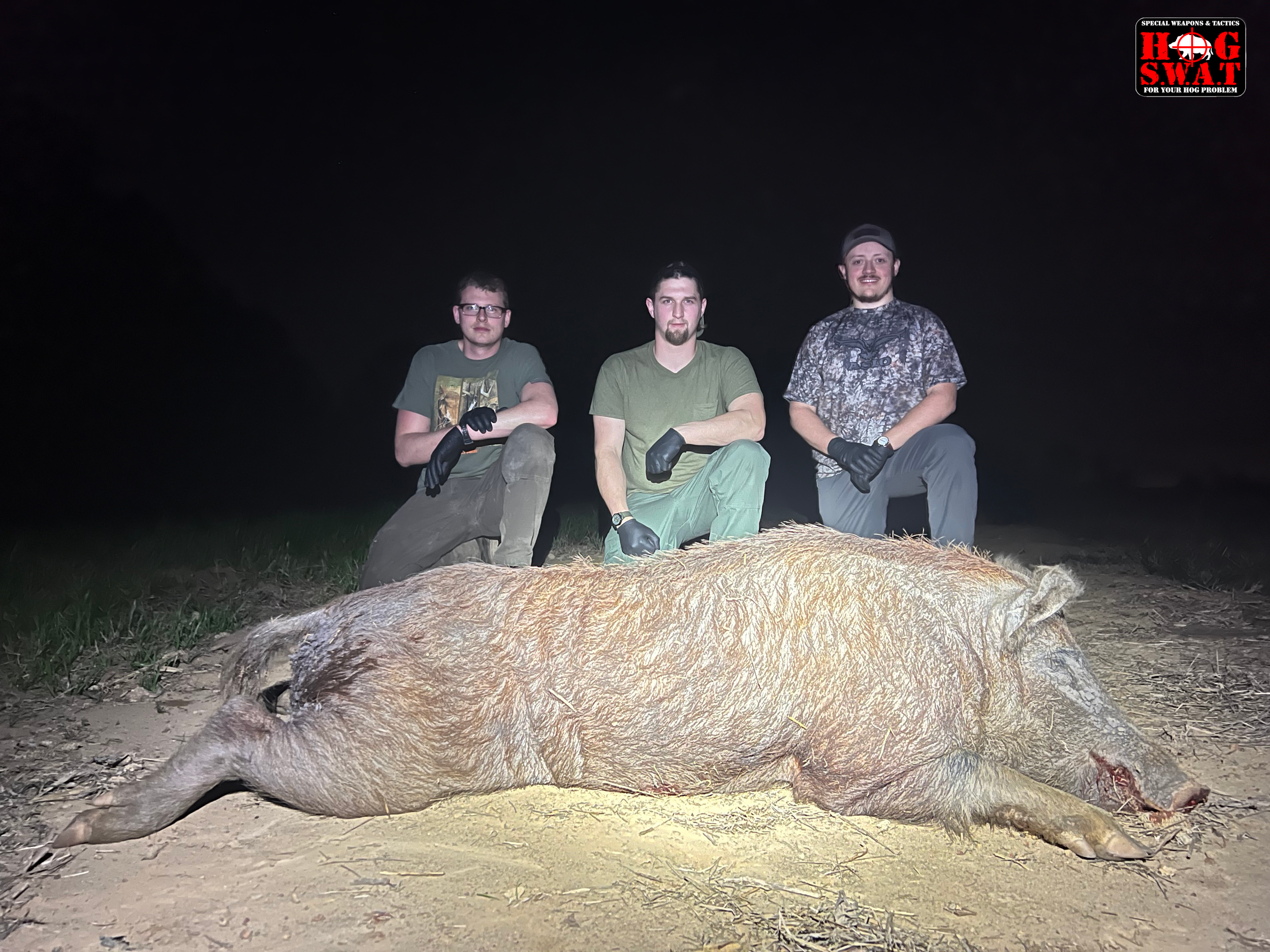
Photo: Hog Hunting Georgia @HogSWAT
📋 Field Report: Tactical Night Operation
Lead Guide: Hank (In coordination with Guide Jordan)
Location: South Georgia Agriculture Belt
Primary Gear: AGM Thermal
Hunting: Wild Boar & Coyote (Simultaneous Engagement)
Outcome: Successful Boar Harvest / Predator Control Initiative
When you book a Hunting Trip with the Best Hog Hunting Company, you have to be ready for the unpredictable. This recent night with Guide Hank started as a routine transit between fields but quickly turned into one of the most high-adrenaline stalks of the Hog Hunting Season.
The "Odd Field" Hog Hunting Discovery
While en route to rendezvous with Guide Jordan for a combined sounder sweep, Hank decided to check an "odd field"—a property that isn't always active but can hold surprises. His intuition paid off immediately when his Thermal picked up a massive solo boar roaming the open ground.
Hunting in the Field: Coyote Hunting
As the team began their stealthy approach, the situation shifted instantly. A Coyote emerged from the brush, charging toward the boar and nearly spooking the target before the hunters could get into position. This is where the Thermal Hunting experience of a Hog SWAT guide becomes invaluable.
The team had to move in a rush to set up before the predator "messed with the pig" and ruined the opportunity. With two different species in the frame, the decision was made to engage both simultaneously—a high-stakes maneuver that requires perfect coordination.
Hunting Wild Hogs
On the count of three, chances were made at both the coyote and the Boar. While the "ghost of the woods" managed to slip away into the shadows, the team remained locked on the primary target. The Wild Boar was successfully secured on the spot, turning a chaotic encounter into a textbook harvest.
This level of rapid-response Hog Hunting is exactly why we are the top choice for Night Hog Hunts in Georgia. We don't just sit and wait; we Wild Hog Hunt with an aggressive, tactical mindset that turns every "odd field" into a potential victory.
🐺 Why Thermal Predator Hunting Matters
In Georgia, managing the coyote population is just as important as controlling the invasive wild boar. When you hunt with Hog SWAT, you are participating in a professional land management program. Whether we are clearing sounders or intercepting predators, our Thermal Gear ensures that we see everything moving in the Georgia Night. That’s why Coyote Hunting and Boar Hunting is important.
Georgia Hog Hunting
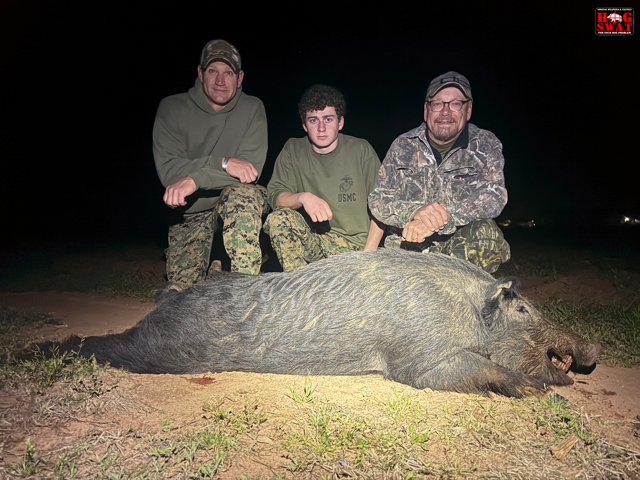
Photo: Georgia Hog Hunting @HogSWAT
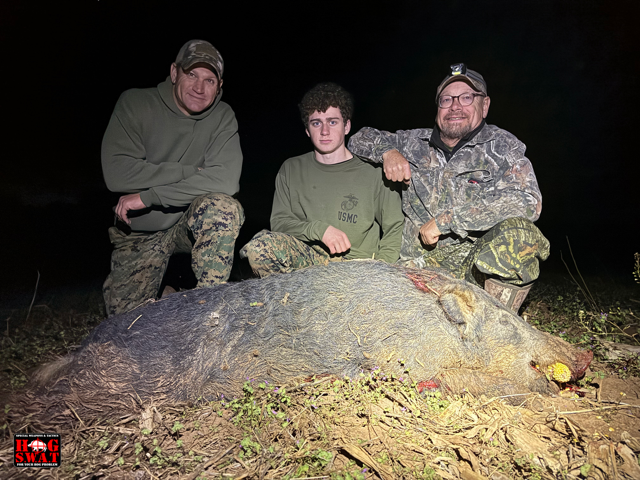
Photo: Thermal Boar Hunting @HogSWAT
📋 Field Report: Night hog Hunting
Lead Guide: Jordan
Location: Americus, Georgia (Sumter County)
Equipment: AGM Thermal
Outcome: Two Successful Harvests + Multiple Stalks
When people say we offerHog Hunting in Georgia, they’re talking about nights like this. Sometimes the action happens before you even step out of the van, and other times it requires a stealthy, move through the corn.
Immediate Engagement: The 5-Foot Encounter
The night started with a scenario you couldn't script. As we pulled up to the first field, a single was spotted running right toward the van. There was no time for tripods or traditional setups. The group reacted instantly, getting into position just 5 feet from the vehicle.
Thanks to our high-mobility setup, the team was able to secure the first harvest of the night before the engine was even cool. It was a perfect example of why Night Hog Hunts require constant readiness.
Hog Hunting in the Georgia Corn
As the night progressed, the strategy shifted from rapid response to stealth. At a nearby property, Jordan located another single in the middle of a field. This required a complex approach—navigating through the corn rows to ensure a safe shooting angle away from local residences.
While the noise of the corn eventually alerted the target, this stalk demonstrated the discipline required for Wild Boar Hunting near agricultural areas. We prioritize safety and precision, even when it means the target slips away.
The Midnight Hunt Grind: Persistence Pays Off
The middle of the night was a "grind," with Jordan scanning several properties and sitting on fields for up to 40 minutes to track movement. We even had a close encounter with a coyote that ran right up to the van, mirroring our first encounter of the night. Which we do Hunt Coyotes In Georgia.
The breakthrough came at the Israel properties. After a close chance on one field, the team moved to the next set of plantings. Jordan led a 100-yard stalk through the corn, where the hunters stayed composed and successfully dropped a second single on the first chance.
Why the Hog Hunting Experience Matters
While some nights feature massive sounders, others are about the individual stalks and the quiet intensity of the Georgia night. At Hog SWAT, we provide the Best Hog Hunting in Georgia by staying in the field until every opportunity is exhausted. From "drive-by" encounters to deep-field stalks, we ensure our guests experience the full spectrum of the Wild Hog Hunt.
🐗 Frequently Asked Questions: Thermal Night Hog Hunting
How close do you usually get to the Wild Hogs? It varies! We’ve had successful harvests from 50 yards away up to 100+ yards. Our thermal gear allows us to adapt to whatever the animal gives us. Every approach is different, we will get as close as we can. Being spotted by the wild hogs is our main concern.
Is it common to see other wildlife like coyotes? Absolutely. While we focus on Wild Boar Hunting, our thermal frequently pick up coyotes, deer, bobcats, armadillos, and other nocturnal wildlife, making every night a unique South Georgia safari experience.
Wild Hog Hunting
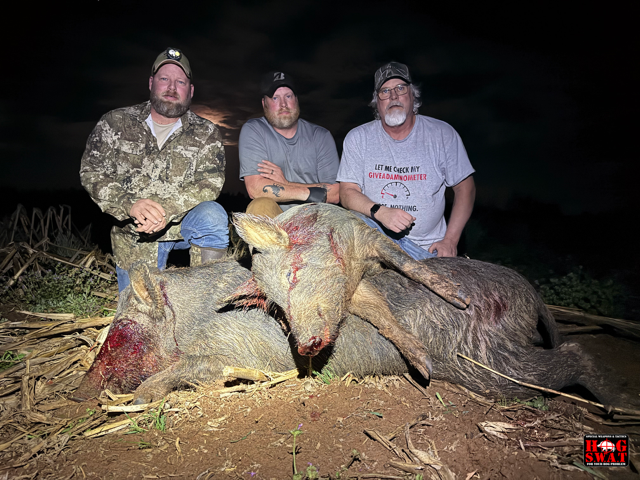
Photo: Hog Hunting Georgia @HogSWAT
📋 Night 2: Hog Hunting Field Report
Lead Guide: Jordan
Location: South Georgia (Sumter County Area)
Conditions: Clear, Thick Corn/Winter Wheat
Equipment: High-Resolution Thermal
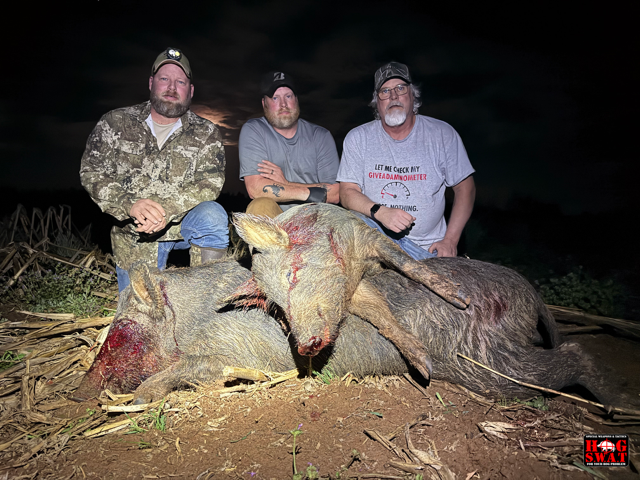
Outcome: Two Large Sows Successfully Secured
If Night 1 of Guide Jordan’s recent 2-night Georgia Hog Hunting Trip was about the excitement of the find, Night 2 was a masterclass in strategy and persistence. Success in the Georgia outdoors requires working the angles, battling the terrain, and waiting for the perfect window to ensure a successful evening.
Coyote Hunting In Georgia
The evening started with a series of scouts across several active properties. While the main targets were staying quiet early on, the group spotted multiple coyotes. Jordan got the visitors positioned for a few opportunities for Hunting Coyotes, but the elusive predators managed to slip away into the darkness.
The Hog Hunting Approach
The momentum changed when Jordan spotted a large group of wild hogs deep in a cornfield. Because of the terrain and nearby structures, Jordan guided the team through a high-stakes, tactical walk-in. To ensure the best positioning, the group took the "hard route"—advancing cautiously along the east treeline to maintain a safe and effective vantage point.
The trek was intense. At one point, the group was incredibly close, moving quietly through the corn. The animals were vocal and agitated, but our team held their positions perfectly.
Securing the Wild Hog Harvest
Jordan predicted the group would move to the right once the action started, and his intuition was spot on. As the encounter unfolded, the team stayed composed under pressure. By the time the movement stopped, the team had successfully secured two large sows.
A Test of Grit In Hunting Hogs With Hog SWAT
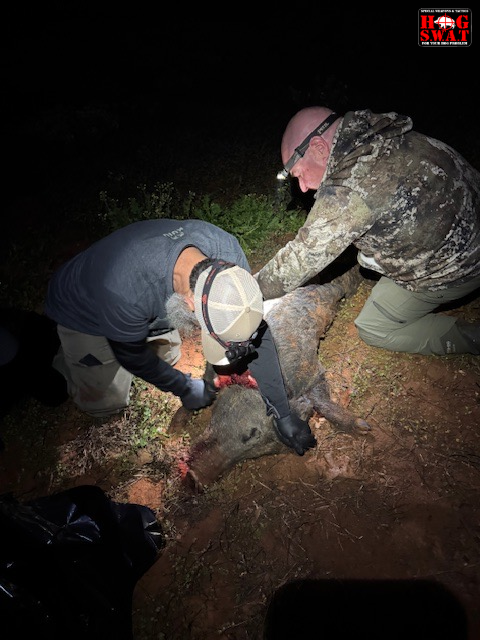
Every Thermal Hog Hunting trip has its challenges, and this one was a testament to the determination of our guests. One of our visitors was back in the field after a major heart procedure—an incredible feat to be out navigating the thick Georgia cornfields. Because of the physical nature of the trek and the size of the collection, the team focused on processing the harvest right there in the field.
FAQ About Night Hog Hunting in Georgia
What is the best time of year for a 2-night hunt in Georgia? While activity happens year-round, each season has its perks. We have to hunt year round to insure the farm fields are protected. There is no best time of the year to Hunt Hogs In Georgia. It is about what time of the year works best for you to Hunt Wild Hogs.
Do I need to bring my own thermal gear to Hog SWAT? No. We provide state-of-the-art thermal gear and equipment for all our guided experiences, ensuring you have the best view of the landscape regardless of light conditions. If you have your own equipment bring it! We offer different discounts for Thermal Hunting gear you bring!
Where is Hog SWAT located? We are based in the Americus, Georgia area, serving several counties across South Georgia known for high wildlife activity and prime agricultural land.
Ready to Join the Next Trip?
Hog Hunting in Georgia
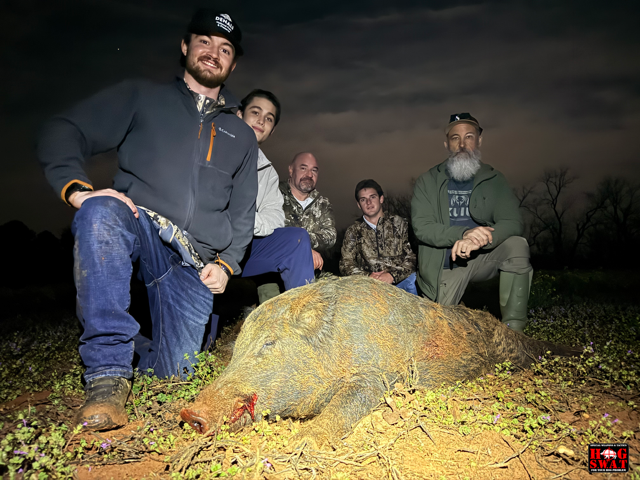
Photo: Hog Hunting Georgia @HogSWAT
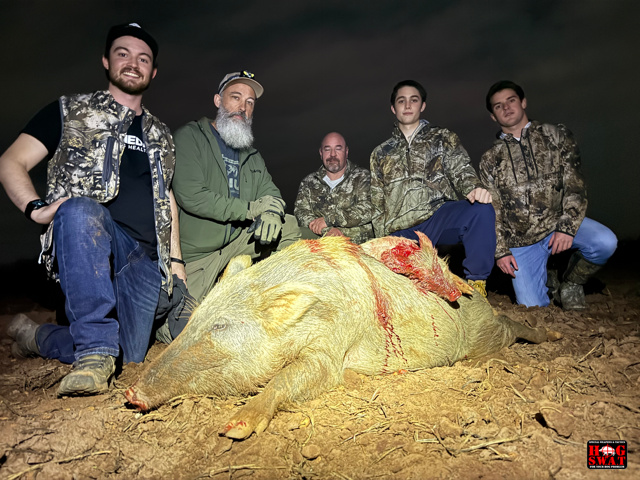
Photo: Thermal Hog Hunting @HogSWAT
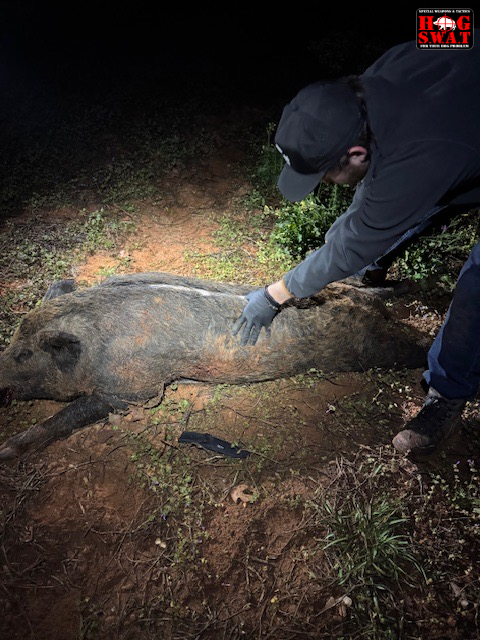
Photo: Hog Hunting @HogSWAT
Photo: Hands On Hog Hunts @HogSWAT
The Best Hog Hunting In Georgia is about more than just whats on the ground; it’s about passing down the skills of a true woodsman. Guide Jordan led a recent Thermal Hog Hunting trip where the mission was as much about education as it was about the harvest. Under a moon that was 'bright as all hell,' the team utilized pivots and natural backdrops to stay hidden while tracking a large sounder.
The tactical patience paid off with a successful double recovery. In a great display of the Wild Hog Hunting lifestyle, the clients and their sons took the lead on the butchering process, spending over an hour learning how to properly handle a harvest in the field. This hands-on experience is a hallmark of our Georgia Guided Hog Hunting—we love seeing the next generation get involved!
The action continued, where a 100-yard stalk led to another clean drop. However, the bright moonlight proved to be a challenging teacher later in the night. Despite a perfect downwind approach on a group of five, the team learned a valuable lesson in Night Hog Hunting camouflage when high-visibility clothing gave away their position. It was a classic teachable moment that ended a Great Success of a night. We’ve got the gear swapped out and the lessons learned, and we are ready for an even bigger Night 2 of Georgia Boar Hunting!
Hog Hunting.
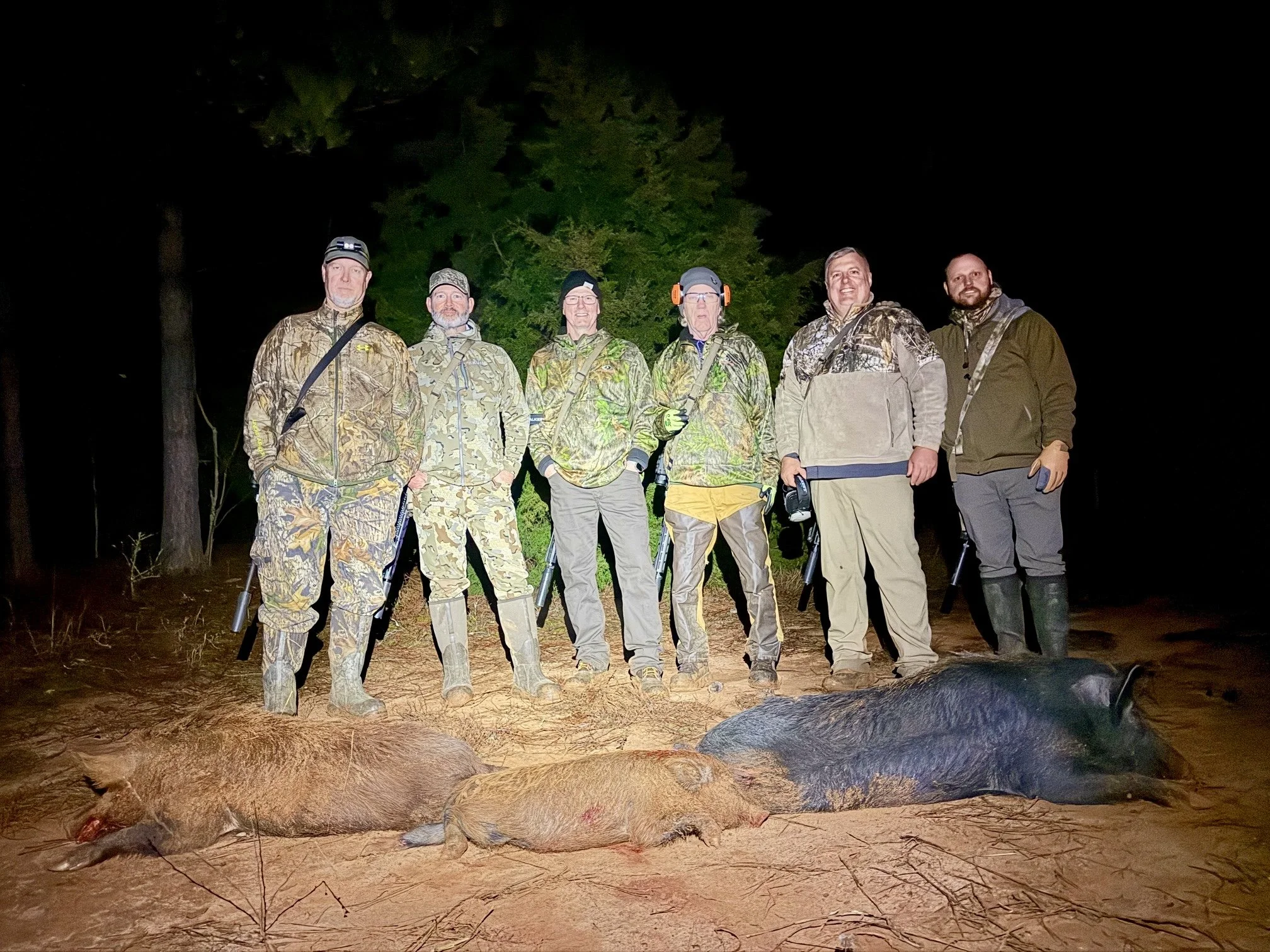
When you book a Large Group Hog Hunt with us, you get the full power of our professional staff. Guide Jordan led one wing of our 6-hunter group for a night of Thermal Hog Hunting. The evening kicked off with a few nuisance beavers before transitioning into a primary Wild Hog Hunting mission.
Despite the challenges of a bright, moonlit night, the team utilized tactical spacing to stay hidden in the open fields. Using our advanced Night Hog Hunts gear, they successfully stalked a Lone Boar, closing the distance to 150 yards for a clean recovery.
The highlight of the night came when Jordan and Max synchronized their groups for a massive joint-effort stalk. After spotting a large sounder on a 30-acre tract, both guides coordinated their hunters for a synchronized approach. This is where Georgia Guided Hog Hunting really shines—seeing a large group move as one unit to secure three additional recoveries. It was a 'Great Success' that proved why we offer the Best Hog Hunts for anyone wanting to bring the whole crew into the field!
Georgia Hog Hunting
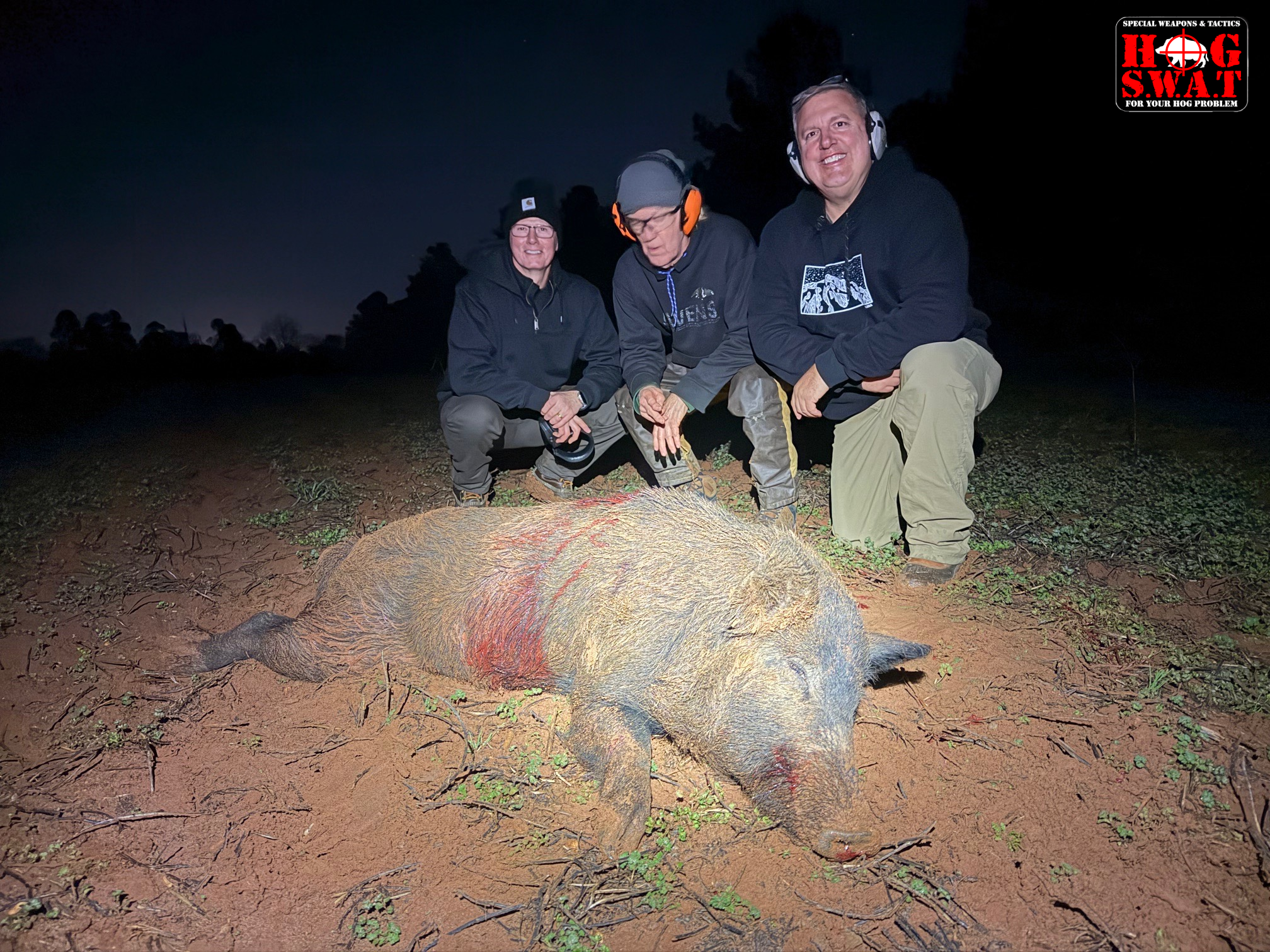
Photo: Hog Hunting In Georgia @HogSWAT
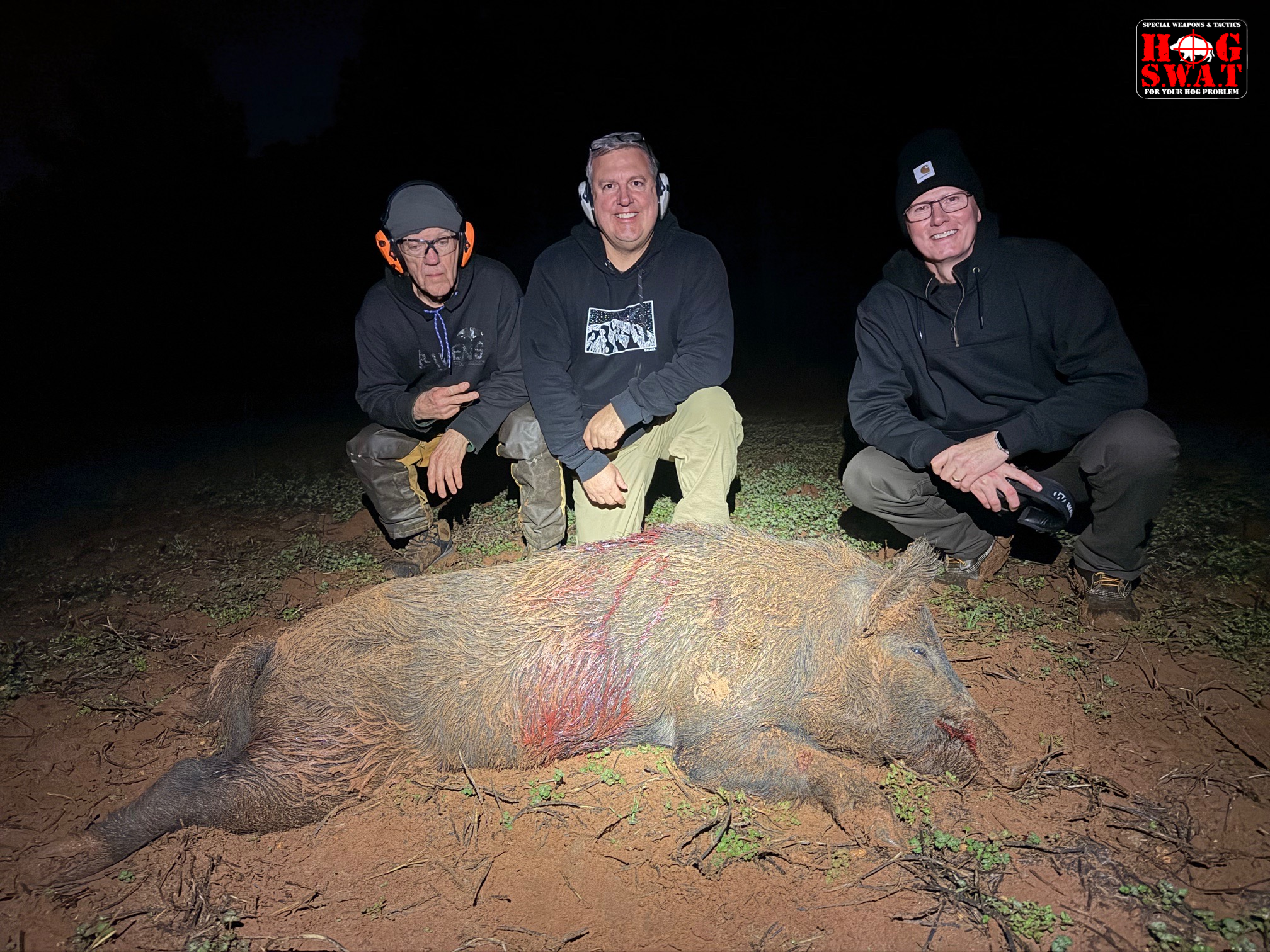
There is something special about Georgia Night Hog Hunting just after a fresh rain. Guide Max led a recent session where the damp air and bright moonlight created the perfect atmosphere for an elite Wild Hog Hunting experience. While the movement started off slow, the team’s persistence paid off as they located a group of three hogs and successfully secured a recovery.
At Hog SWAT, we know that for many of our guests, the Best Hog Hunting experience doesn't end in the field. This group is walking away with more than just a great story; we are processing their harvest into premium Cheddar Jalapeño and Maple links. Along with the custom sausage, they’ve requested a professional Euro mount to commemorate their Hog Hunting success.
Whether you are here for the high-octane action of Thermal Hog Hunts or you’re looking to stock your freezer with the best organic meat, we take pride in every step of the process. It’s always 'fun shooting stuff,' but it’s even better when that Guided Hog Hunting trip results in a trophy on the wall and a feast on the table
Boars or Boats?
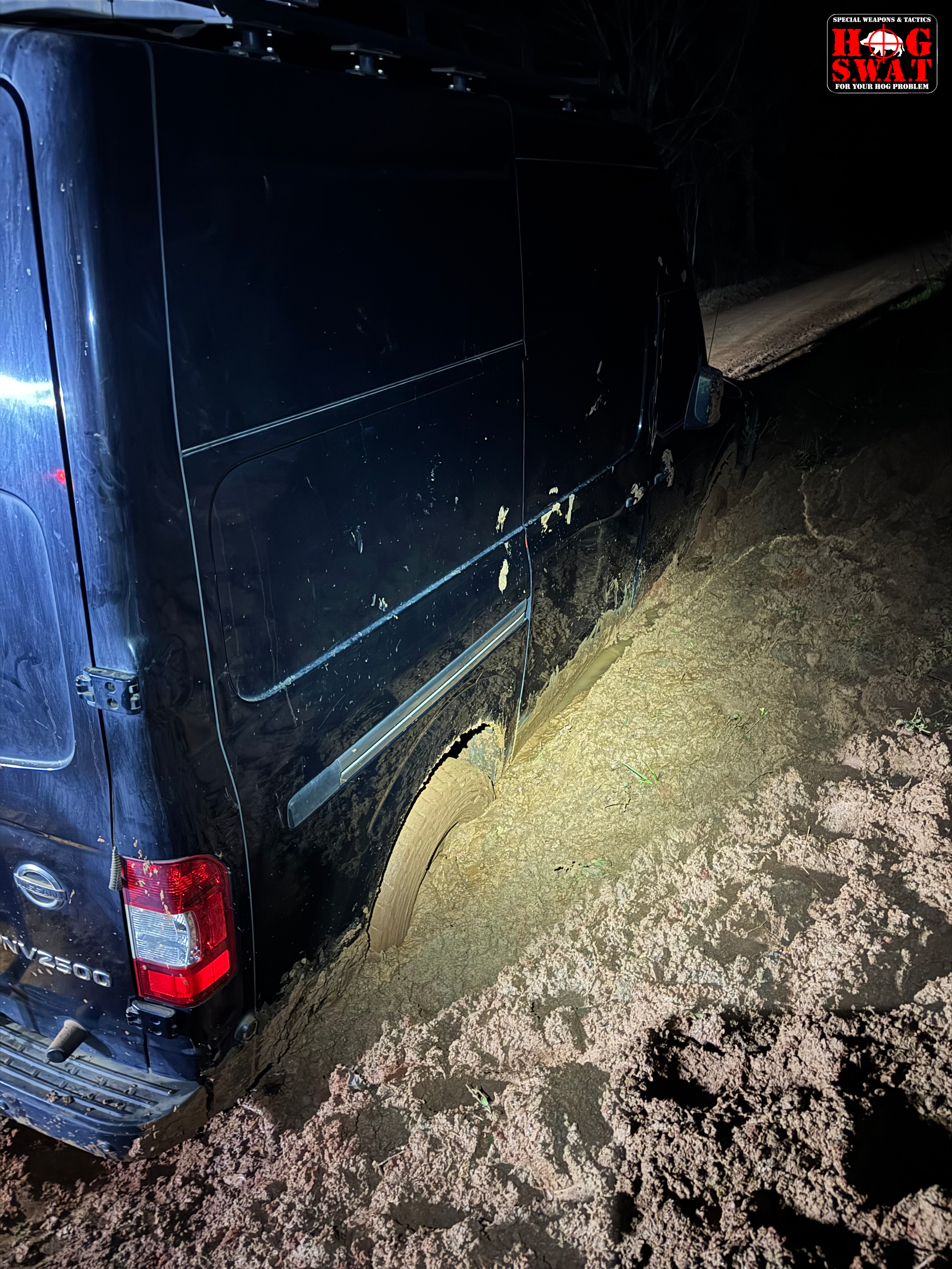
We always tell our guests that Hog Hunting Georgia is an adventure, but guide Jordan took that a little too literally this week. Everyone knows Jordan isn't much of a boat guy, but apparently, he needed a reminder that our scouting vans don't exactly come with a hull and a propeller.
While out on a high-stakes Thermal Hog Hunting mission, Jordan found a patch of Georgia 'marsh' that was a little deeper than it looked. We’re not sure if he was trying to turn a Night Hog Hunting trip into a deep-sea expedition, but the van decided it was much happier being a submarine than a transport vehicle.
Luckily, the only thing that got hurt was Jordan’s pride (and maybe his boots). While he may not understand that vans don't float, he definitely knows how to find the pigs. We’ve told him that from now on, we’re keeping the Wild Boar Hunting on solid ground. If you’re looking for a guide who is willing to go to the depths—literally—to find your sounder, Jordan is your man. Just maybe bring some waterproof waders just in case!
Thermal Hog Hunts
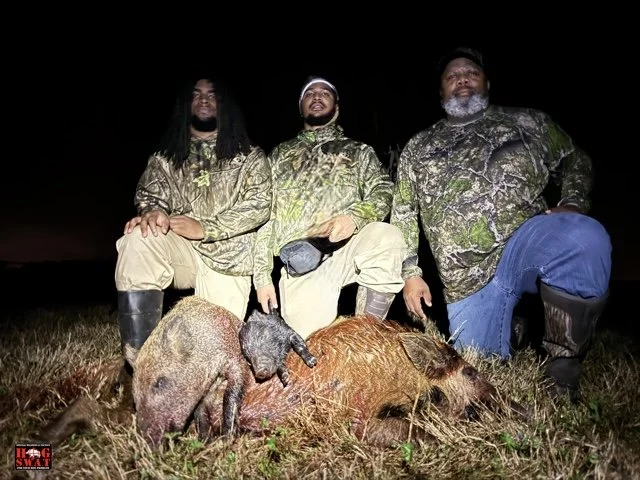
Night two of our Hog Hunting Georgia expedition proved that in the world of Wild Boar Hunting, you have to be ready for anything—technical or otherwise. We started the evening at our newest property, utilizing Thermal for Hog Hunting to track a large sounder moving through a low spot near a local pond.
Professionalism is key in Night Hog Hunting, so we exercised extreme patience, waiting for the sounder to clear a group of nearby deer before engaging. Despite an initial equipment hurdle, the team stayed focused. When a second sounder entered the field exactly where the first had been, we seized the opportunity. With all three shooters synchronized, we secured a triple recovery in a high-action encounter that pushed our equipment to the limit.
The night wasn't without its technical challenges. Between re-mounting a silencer and performing a field-reset on a thermal unit, our guides proved they are just as much technicians as they are hunters. At Hog SWAT, we ensure the gear stays running so the Hog Hunting experience never stops. Though the group decided to head in early after a long night of tactical maneuvers and field dressing, it was another successful chapter in our South Georgia management efforts.
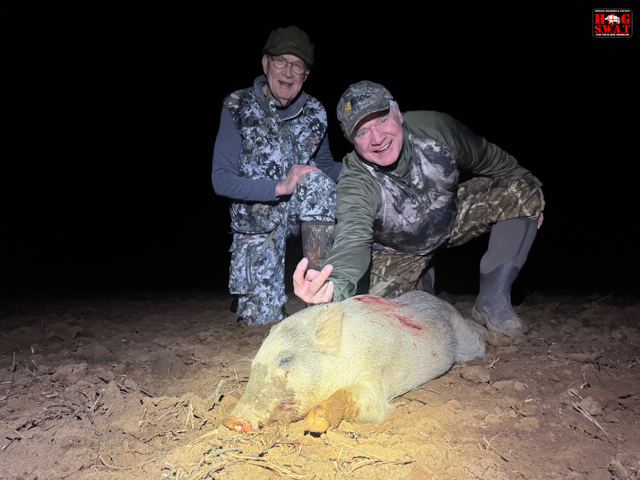
Night Hog Hunting
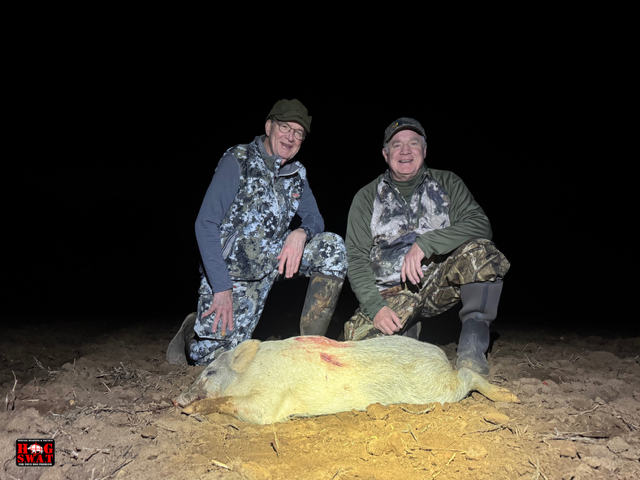
Photo: Wild Hog @HogSWAT
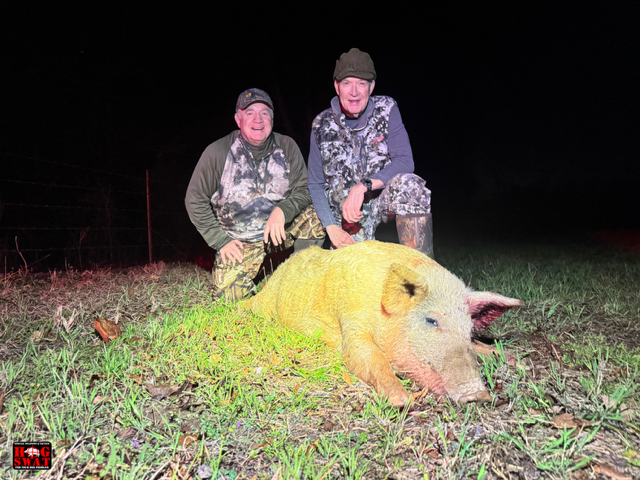
Photo: Hunting Hogs @HogSWAT
The final night of our Georgia Hunting Trip with guide Jordan required a high level of tactical awareness and terrain management. We began the evening at a property with high activity, identifying a sounder on the western edge of the fields.
Because the terrain had been freshly tilled—making foot travel difficult—Jordan utilized a strategic road-side approach. This allowed our guests to maintain a steady position while closing the distance to 110 yards. Our Thermal Hunting equipment provided a clear advantage, resulting in a successful recovery to start the night.
The action continued as we transitioned to a secondary location where another sounder was located. By 'hugging the tree line' to mask our silhouettes, we were able to close within 90 yards of the closest group. This stealthy maneuver led to another successful Wild Hog recovery, even as the sounder scattered.
To wrap up the night, our scout Noah identified the 'tops' of hogs feeding in a deep low spot. This required a 'over the horizon' stalk, where the terrain hides both the hunter and the target. We managed to get within 70 yards before the sounder’s keen senses alerted them to the encounter. While the final group made a quick exit, the night was a testament to the skill required for Boar Hunting in the varied landscapes of Georgia. It was a trip full of tactical maneuvers and successful recoveries that our guests won't soon forget.
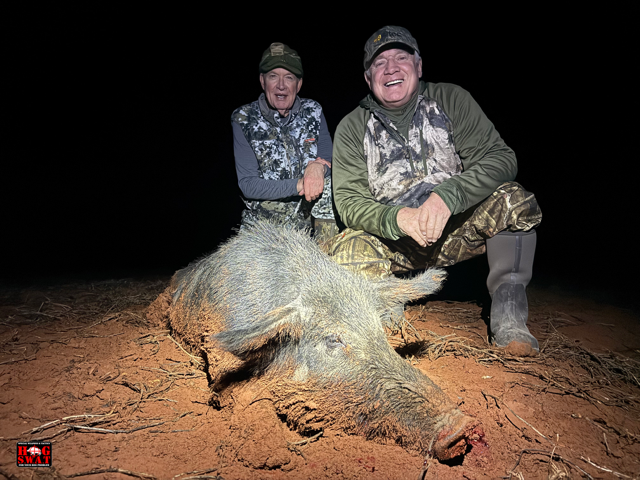
Hog Hunting With Thermal
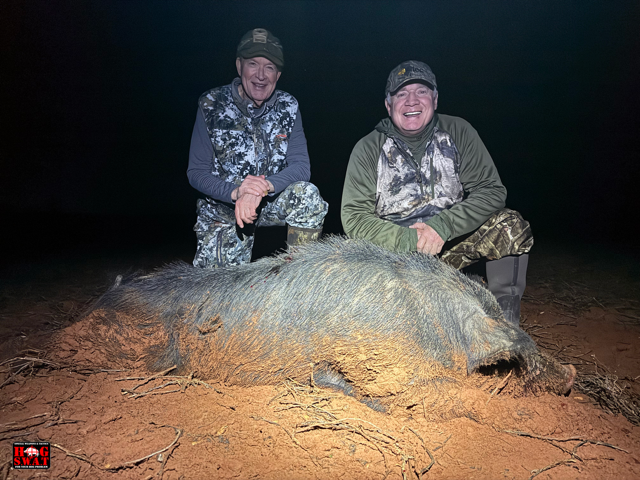
The first night of our Georgia Hunting Trip with guide Jordan was a masterclass in thorough scouting. After checking several sectors with no activity, our team utilized a coordinated scouting strategy at a new location. By splitting our observation points, we were able to quickly identify a single Wild Hog in a low spot of the field.
The group executed a disciplined approach, closing the distance to 100 yards. In professional Boar Hunting, ensuring a clean recovery is the top priority. After the initial connection, the team moved in and utilized follow-up measures to ensure the process was handled with professional standards. It was a successful start that rewarded the group's patience during the early quiet hours.
Later in the evening, our Thermal Hog Hunting scouts located another single in the western fields. We took our time with this 120-yard setup, emphasizing the Hog SWAT philosophy of being '100% ready' before calling the shot. While technical readiness at the range is one thing, the heat of a Wild Hog encounter can challenge even the most prepared. Although the second opportunity didn't result in a recovery before the target reached the property line, the night provided invaluable experience in real-world tactical conditions. We are ready to take these lessons into night two for more Hog Hunting in Georgia.
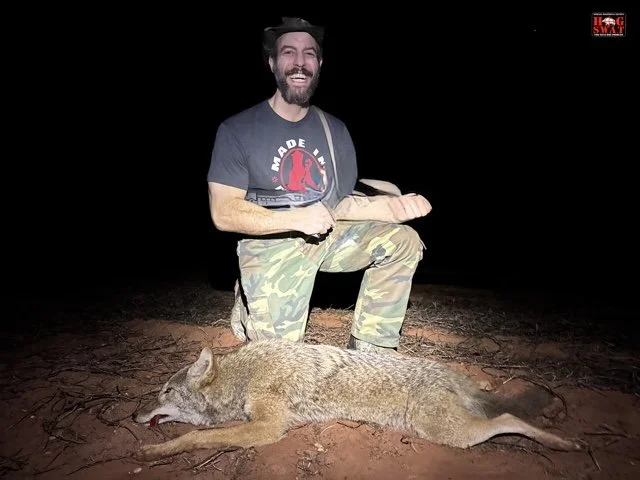
Coyote Hunting.
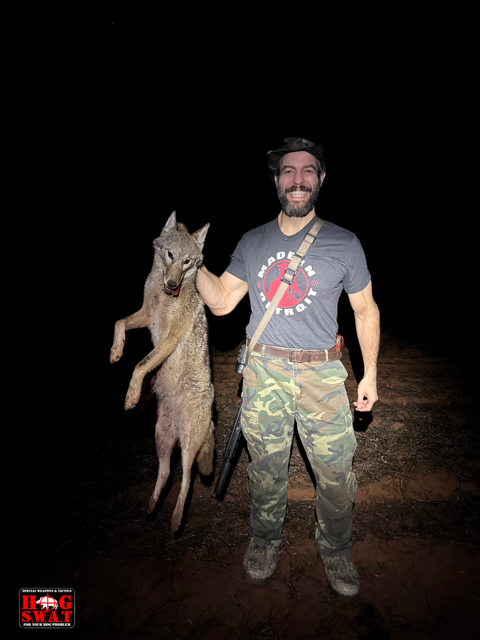
Photo: Coyote Hunting @HogSWAT
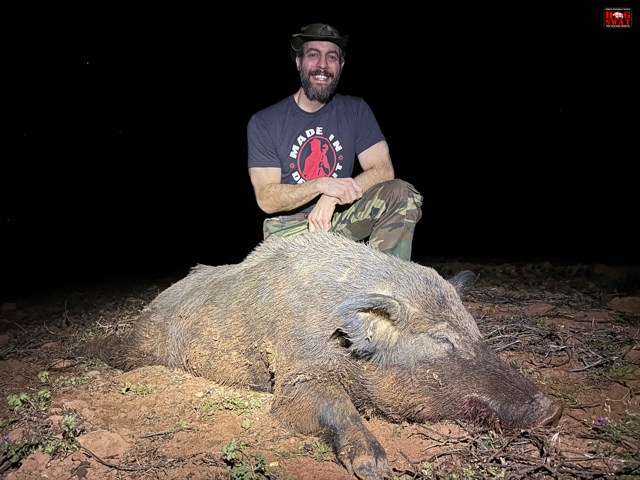
Photo: Boar Hunting @HogSWAT
The second night of our South Georgia Hunting Trip with guide Jordan was a masterclass in persistence. After scouting several quiet sectors, our Thermal Hunting technology identified a single Wild Hog feeding near a tree line. The team executed a patient stalk, closing the distance to 70 yards for a clean, successful recovery.
The action then pivoted to Predator Hunting. While monitoring an agricultural pivot, the group encountered a coyote. After an initial high-stakes encounter, Jordan used tactical repositioning to set up a second opportunity from 100 yards out. The team stayed focused, resulting in a successful Coyote Hunting recovery that highlights the versatility required for Night Hunts in Georgia.
To wrap up the evening, we returned to a high-activity field and located a massive Wild Hog—a giant lone boar. With other hogs scattered in the distance, our guide prioritized the closest high-value target. A precise setup led to an instant recovery of the large boar, finishing the night on a high note. Whether we are focused on Boar Hunting or managing local predators, Hog SWAT delivers a professional, tactical experience every time we step into the South Georgia fields.

Boar Hunting Georgia
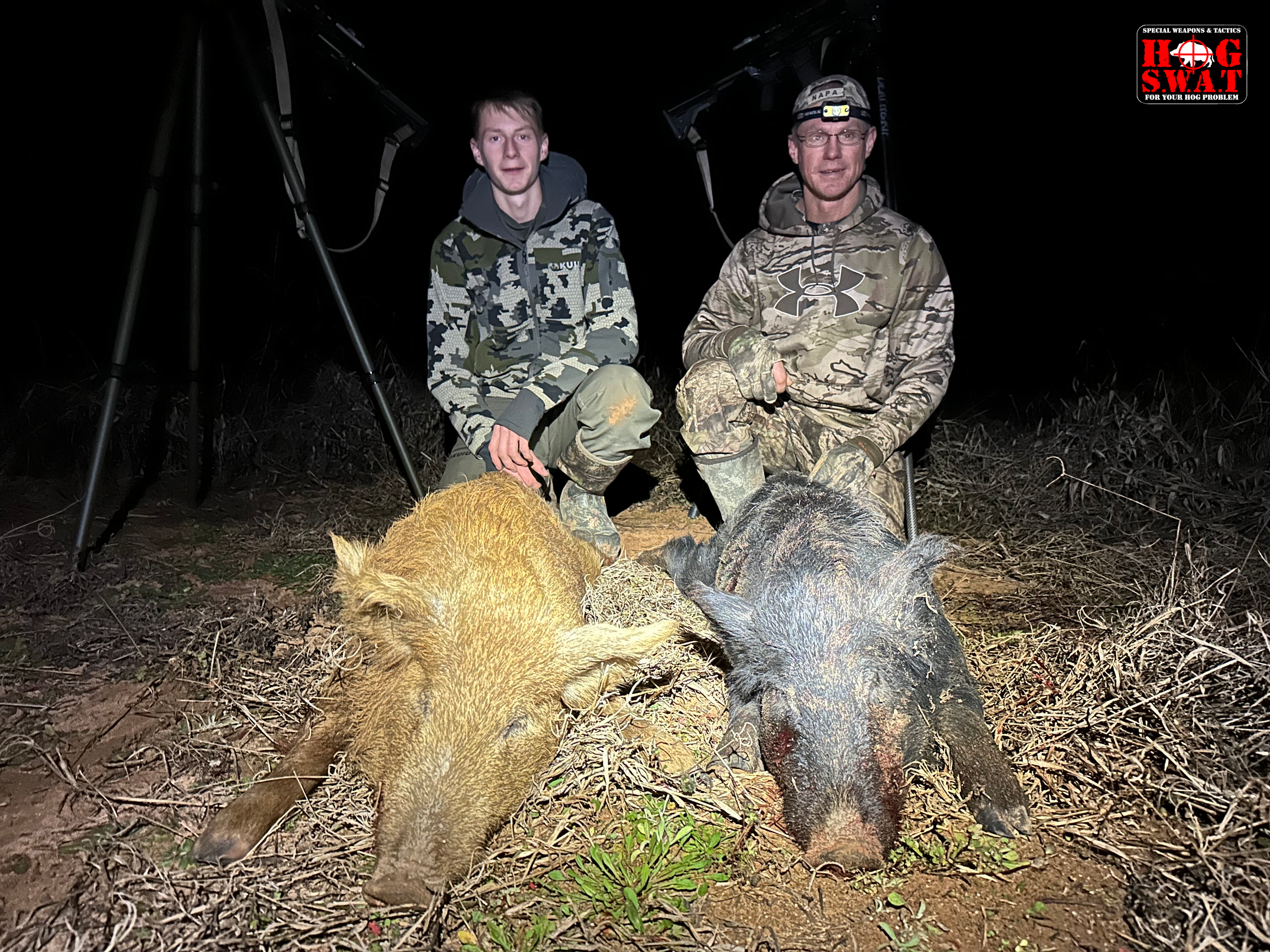
Photo: Hunting Hogs @HogSWAT
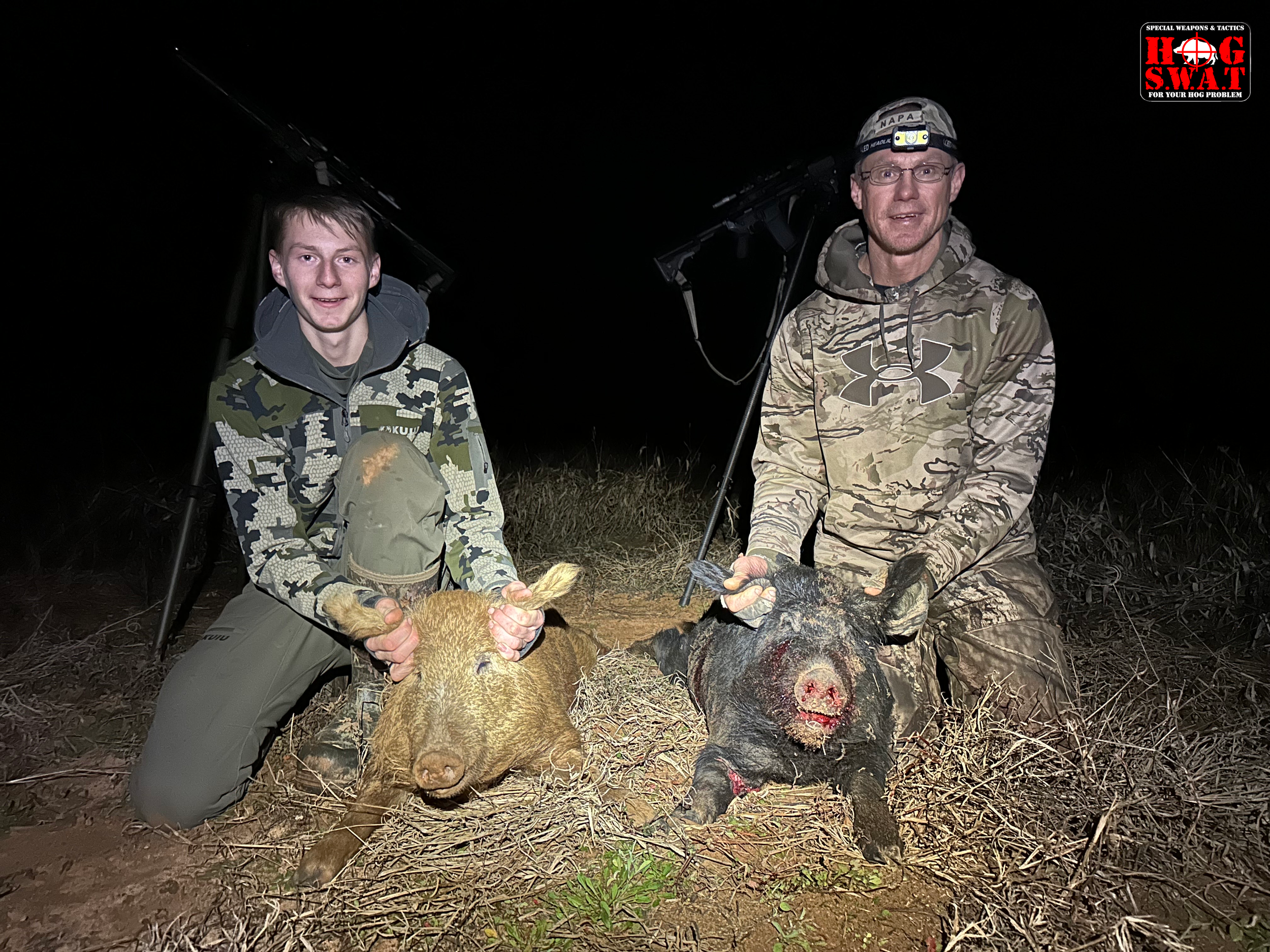
Photo: Thermal Hog Hunting @HogSWAT
When you are out for Boar Hunting in South Georgia, the pace can change in an instant. The final night of our recent guided trip started quietly, with limited movement across the first few fields we scouted.
However, in the world of professional Hog Hunting, patience is a requirement. After covering multiple areas without activity, our Thermal Hunting technology finally picked up heat signatures late in the evening. We located two Wild Hogs moving together, providing the best opportunity of the entire trip.
With the conditions finally lining up, Hog SWAT guide Zev positioned the group for a tactical, clean setup. The precision of our Georgia Thermal Hunting gear allowed the group to capitalize immediately, resulting in two Wild Hogs successfully recovered.
While the activity can vary from night to night in Georgia, this trip reinforced the importance of staying committed until the final opportunity. At Hog SWAT, we are the premier Georgia Hog Hunting and Boar Hunting Outfitters, ensuring every guest gets a high-quality experience under real field conditions.